

Hear the Conversation | Get the Book
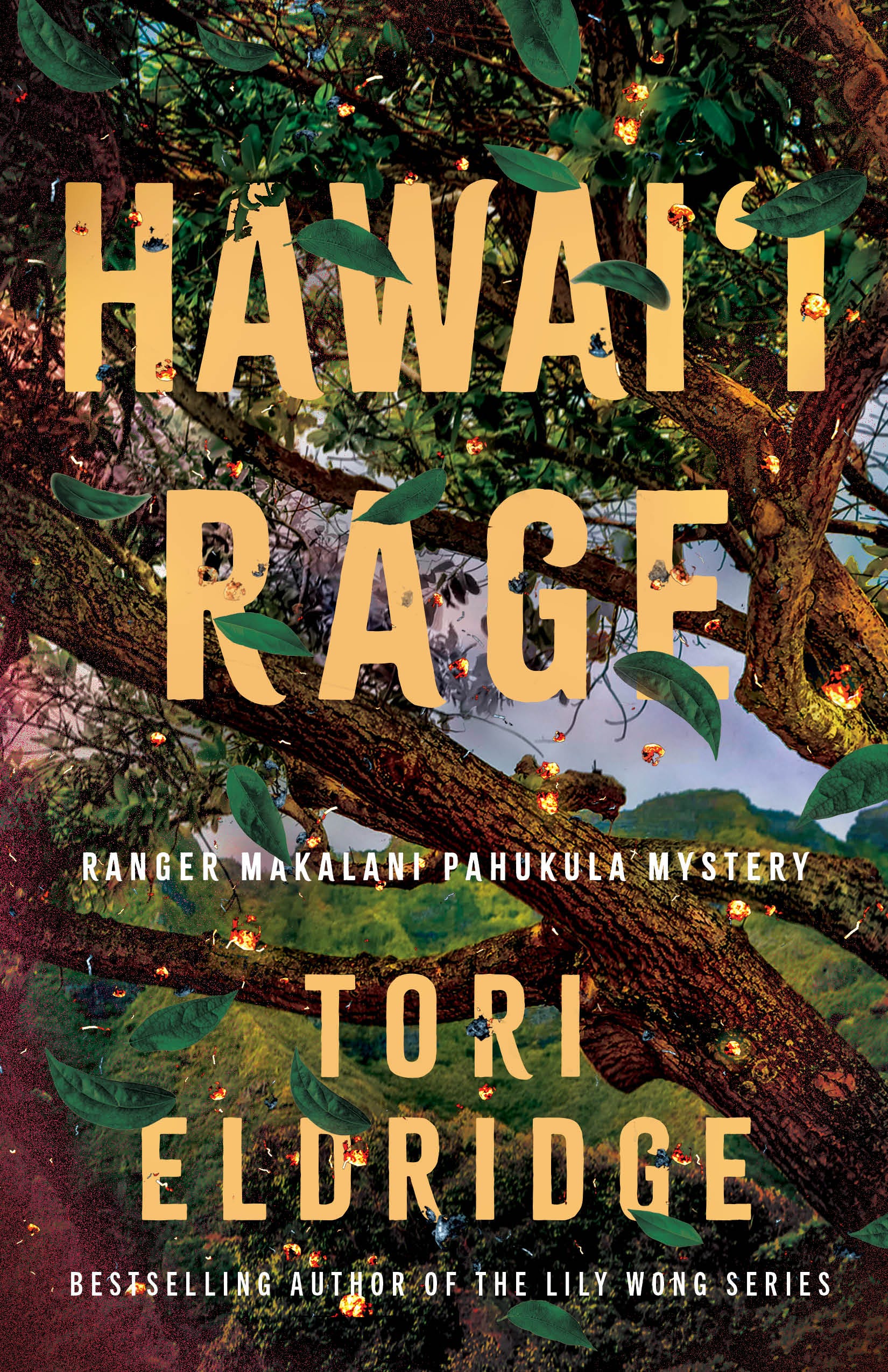
In Hawai‘i Rage, Tori Eldridge does not merely set a mystery against the backdrop of Hawai‘i. She lets the land breathe, brood, and remember. The result is a novel that feels less like a whodunit and more like a slow excavation, where each layer of soil yields not just clues, but inheritance.
At the center of the story is Makalani, an interpretive ranger whose professional instincts have been dulled by a posting beneath her capabilities. When she is drawn into investigating a rancher’s gruesome death, the narrative begins its quiet pivot. The family surrounding the dead man feels misaligned, as if their grief has seams, and Makalani begins to pull at them.
Tori told me this novel is her most “mystery-forward.” But the mystery is only the visible architecture. Beneath it lies a deeper design, one that begins, as Tori’s work often does, with place. North Kohala is not simply a setting but a generative force. It is the origin point from which characters and plot emerge. Tori’s creative process moves outward from geography to genealogy to narrative. Family histories entwine with the broader currents of Hawaiian past. Her method allows exposition to feel like revelation rather than interruption. Cultural detail arrives not as ornament but as necessity.
What distinguishes Tori’s work is her insistence that identity is neither static nor singular. Makalani’s return to Hawai‘i after years on the mainland introduces a tension that resonates far beyond the islands. She is both insider and outsider, tethered to heritage yet estranged from its contemporary expressions. The question of what it means to be “local enough” to belong reverberates through the novel, echoing the broader diasporic experience. In this way, Tori transforms a regional narrative into something quietly universal.
The novel’s engagement with paniolo culture, the Hawaiian cowboy tradition, is similarly layered. What might become a novelty in another writer’s hands is rendered here with both historical specificity and sensual immediacy. The reader feels the texture of the land, the weight of the cattle, the cadence of wind and birdsong. These details are not decorative. They are constitutive, shaping both the mystery and the emotional landscape in which it unfolds.
Tori’s background as an actor is evident in her treatment of character. In her world, there are no minor roles. Each figure, from a ninety-seven-year-old patriarch to a child just beginning to understand the world, is given a distinct voice. This multiplicity creates a narrative density that mirrors the complexity of the mystery itself. We are not simply solving a puzzle but vicariously inhabiting a community, one whose secrets are shared, withheld, and, ultimately, revealed.
Perhaps most striking is how Tori is writing not just toward resolution but toward recognition. The novel’s suspense is real and propulsive. But its deeper satisfaction lies in the moment when disparate threads cohere into something inevitable. We do not merely learn what happened. We understand why it could not have happened any other way.
In “Hawai‘i Rage,” the past is not prologue. It is presence. And in giving it voice, Tori Eldridge reminds us that every mystery worth solving is a story about who we… are and how we came to be.