

Hear the Conversation | Get the Book
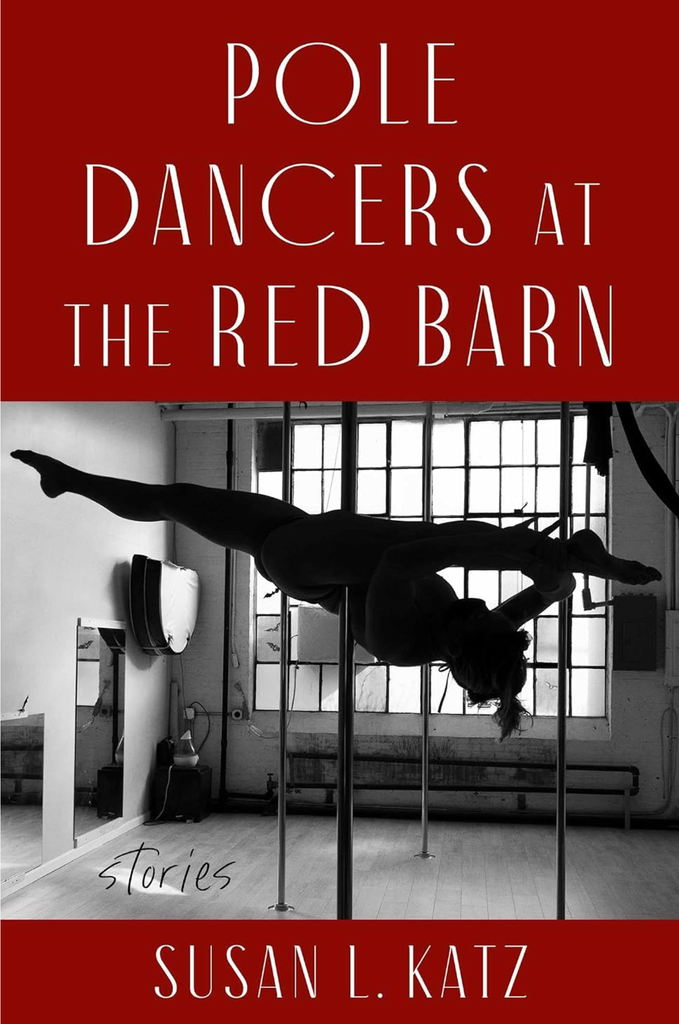
A pole-dancing club in Pennsylvania might seem an unlikely place to untangle a family history. In Susan L. Katz’s Pole Dancers at the Red Barn, it is precisely where those histories finally have a voice. Across fourteen linked stories, set between the nineteen-forties and the nineteen-eighties, dancers, owners, mothers, and children carry old injuries into a room where someone may be willing to listen.
Susan’s Red Barn has little interest in the usual rules of nightlife. Its performers have the aerial skill of circus artists and the wit of women who know how to hold an audience. Sometimes they step away from the pole and address the crowd directly, offering a story or an unexpected word of encouragement. The club is part spectacle, part neighborhood gathering place. Its regulars come to watch, but they also come to be known.
That distinction matters to Susan, who spent more than four decades as a psychotherapist. She has listened to people whose capable public lives concealed private anguish. In these stories, a person’s composure can be convincing right up to the moment it gives way. A mother’s agoraphobia alters the shape of a child’s world. A gender-nonconforming teenager endures cruelty. Sexual violence persists in memory, especially when the person who suffered it has been taught to feel responsible.
One of the book’s revealing encounters begins with two dancers drinking bourbon at the bar. One sees the faded cuts on the other’s wrists. Their conversation moves, cautiously, beyond pleasantries, until a long-buried experience can be named for what it was: an assault. Nothing about the setting makes this easy. But the presence of another person changes what can be said about it.
The book took more than a dozen years to write. Susan has described the individual stories as arriving intuitively, then demanding the painstaking construction of a timeline that could hold several generations together. That combination of impulse and careful arrangement suits her subject. Families seldom pass down their histories in order. A child learns a mother’s fear before learning its cause and may understand its reach only decades later.
Susan is also a professional photographer, and each story opens with one of her images. Her attention to a scene’s visual character feels at home in a book concerned with what people notice, and what they miss. A tree leaning against a country sky can suggest a mood; it cannot tell us what happened beneath it. For that, someone must speak, and someone else has to listen.
The Red Barn offers no quick cure for pain, inherited or otherwise. Its promise is smaller and more credible. It is a place where people can revise the stories they have been forced to tell about themselves. Susan L. Katz’s characters cannot undo what happened before they met. They can begin, together, to understand it differently.