

Hear the Conversation | Get the Book
Steena Holmes has a confession to make. Before she became the prolific architect of midnight anxiety, spinning more than 55 psychological thrillers and selling over three million books, she was a minister.
The irony is almost divine. Steena once stood behind a pulpit searching for light. Now she makes her living exploring the darkest, most deceptive corners of the human psyche.
“You always know that there’s something behind what’s being shown,” Steena tells me, recalling her years in ministry. That instinct, the suspicion that every polished surface conceals a crack, powers her latest novel, When You Tell.
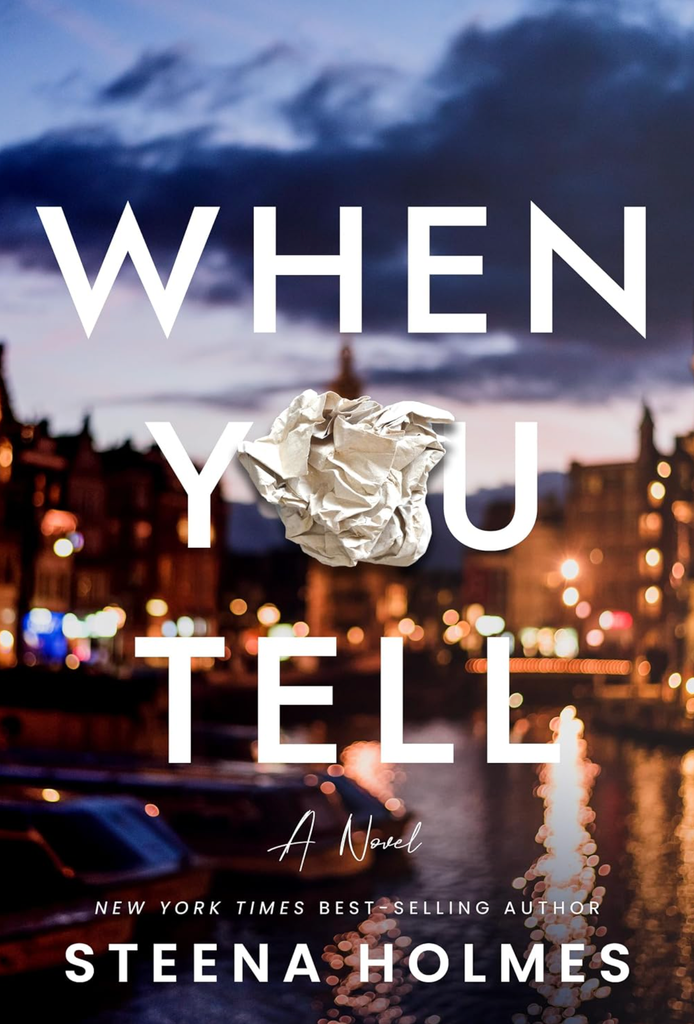
The thriller takes a sledgehammer to the carefully curated fantasy of life online, plunging into cancel culture, buried trauma, and the addictive toxicity of digital celebrity. At its center are two women reunited after 18 years of silence. Brie Wagner is a traumatized ghostwriter desperate to remain invisible. Miranda has transformed herself into Randy F. Alexander, a lifestyle influencer followed by millions.
One woman disappears for a living. The other survives by being seen. Their collision gives Steena the perfect setup for a psychological pressure cooker. In an era when nearly everyone has become the anxious publicist of their own existence, When You Tell asks a quietly terrifying question: Who are we when the ring light goes dark?
Steena did not grow up dreaming of literary stardom. She was a bored executive assistant when her husband essentially dared her to write a book. Six months later, she had completed a romance novel and landed a publishing contract.
Then she went dark. With Finding Emma, Steena tapped into the raw, primal fears of motherhood and watched her career explode. Suspense became her natural habitat, the place where ordinary lives could split open and reveal the terror underneath.
Her working method is as relentless as her fiction. Steena often writes three books at once, rotating among them during morning, afternoon, and weekend shifts. She resembles a literary DJ, keeping three records spinning without losing the beat.
Yet beneath that staggering output lives the same imposter syndrome tormenting just about every author I’ve interviewed. Each new release brings the fear that this will be the book that exposes her as a fraud.
For When You Tell, Steena abandoned some of her earlier, improvisational approach and embraced meticulous plotting. She placed the story among Amsterdam’s canals and brown cafés, where old-world beauty becomes camouflage for modern secrets. Though conceived five years ago, the novel feels unnervingly tuned to the present moment.
Steena is not merely manufacturing thrills. She is using fiction as therapy, dragging personal demons and cultural anxieties into the light where she can interrogate them.
In When You Tell, she holds a cracked black mirror to our screen-addicted age. The reflection is glamorous, seductive, and deeply unsettling.
Steena Holmes knows the most dangerous secrets are rarely buried in darkness. They are smiling directly at us through a flawless filter.