
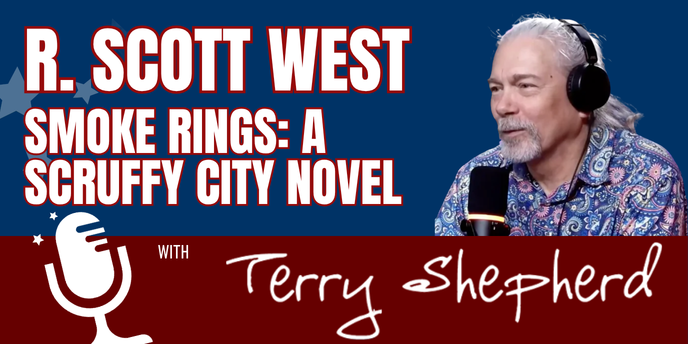
Hear the Conversation | Get the Book
Twenty years ago, Knoxville’s Market Square looked less like the heart of a city than its aftermath. Of its thirty-six addresses, thirty-three sat empty or boarded up, the old brick buildings sagging beneath decades of neglect. The place had history, but little pulse.
R. Scott West and his wife, Bernadette, saw something else. Bernadette, an international flight attendant raised in Germany, remembered the public squares of Europe. These were places where commerce and conversation spilled into one another, where cafés, shops, apartments, and pedestrians formed the building blocks of civic life. The couple began imagining something similar for Knoxville. They bought condemned properties, invested millions, restored buildings, and helped turn a nearly abandoned block into the kind of place where people once again wanted to linger.
It would make a satisfying tale of urban renewal were it not for one inconvenient detail. The renaissance was financed by a twenty-five-thousand-pound marijuana-smuggling operation.
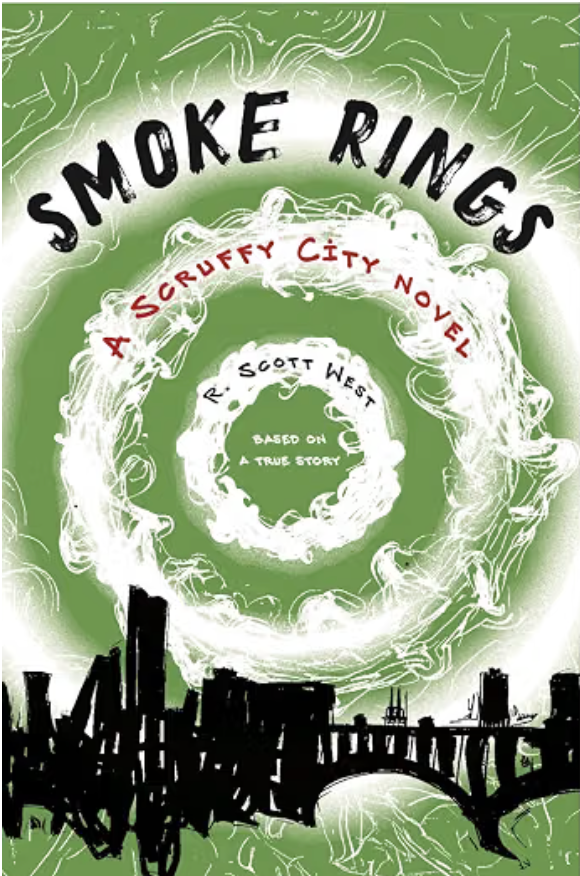
Scott has now transformed that peculiar chapter of Knoxville history into Smoke Rings: A Scruffy City Novel, a fictionalized account of ambition, family, crime, and the curious elasticity of morality. It is funny where one expects penitence, reflective where one expects bravado, and built around a question that refuses to sit quietly in the background: Can a person knowingly break the law while believing, perhaps sincerely, that he is doing good?
Scott’s answer is complicated only in its details. Marijuana prohibition, he argues, is an historical anomaly rather than an eternal moral truth. Cannabis was legal before federal prohibition tightened in the twentieth century, and widespread legalization has since returned. To Scott, illegality and immorality were never synonyms.
He and his brother saw themselves less as drug kingpins than Appalachian outlaws in the tradition of Butch Cassidy and the Sundance Kid. Their proceeds did not disappear into yachts or numbered bank accounts. Some $2.1 million went into Knoxville real estate and historic preservation.
The distinction did not impress federal authorities. The enterprise collapsed after Scott’s brother boasted about stash houses and Market Square properties to an old high-school acquaintance who happened to be wearing a wire.
On July 16, federal agents descended. Scott eventually received a four-and-a-half-year prison sentence. Bernadette, facing the possibility that other members of the family could be prosecuted, accepted a plea agreement and served two years.
Prison, Scott told me, became less an interruption than another chapter. He lifted weights, drafted four books, and improvised a radio antenna from Doritos wrappers. He also wrote. A lot. lyrics, stories and the first inklings of a narrative that would become a fictionalized memoir.
That mischievous energy animates Smoke Rings. The novel blends Appalachian family mythology, magical realism, Mark Twain references, and a twenty-nine-song soundtrack that nods to Scott’s years playing in a punk band.
And then there is the final irony. After prison, Scott returned to Knoxville and spent years buying back properties the government had seized. The man who helped revive Market Square with money earned illegally lost much of what he had built, then began building again.
History, Churchill supposedly observed, would be kind to him because he intended to write it.
R. Scott West appears to have taken the advice literally.