
Hear the Conversation | Get the Book
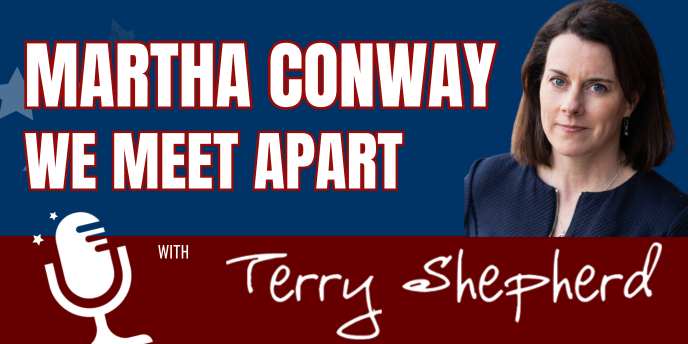
There is a special category of dread reserved for the traveler suspended 30,000 feet above the Atlantic. One is committed to the mercy of engines, weather, mathematics, and faith. For the novelist Martha Conway, this was more than metaphor. Returning from Europe with her family, she heard the pilot announce a mechanical failure. For an hour, she sat inside the small, pressurized democracy of possible catastrophe. Then the plane landed safely in Shannon, Ireland. It was Martha’s birthday. She was deposited, shaken but intact, in the country her ancestors had left behind, as though history had briefly opened a side door and invited her through.
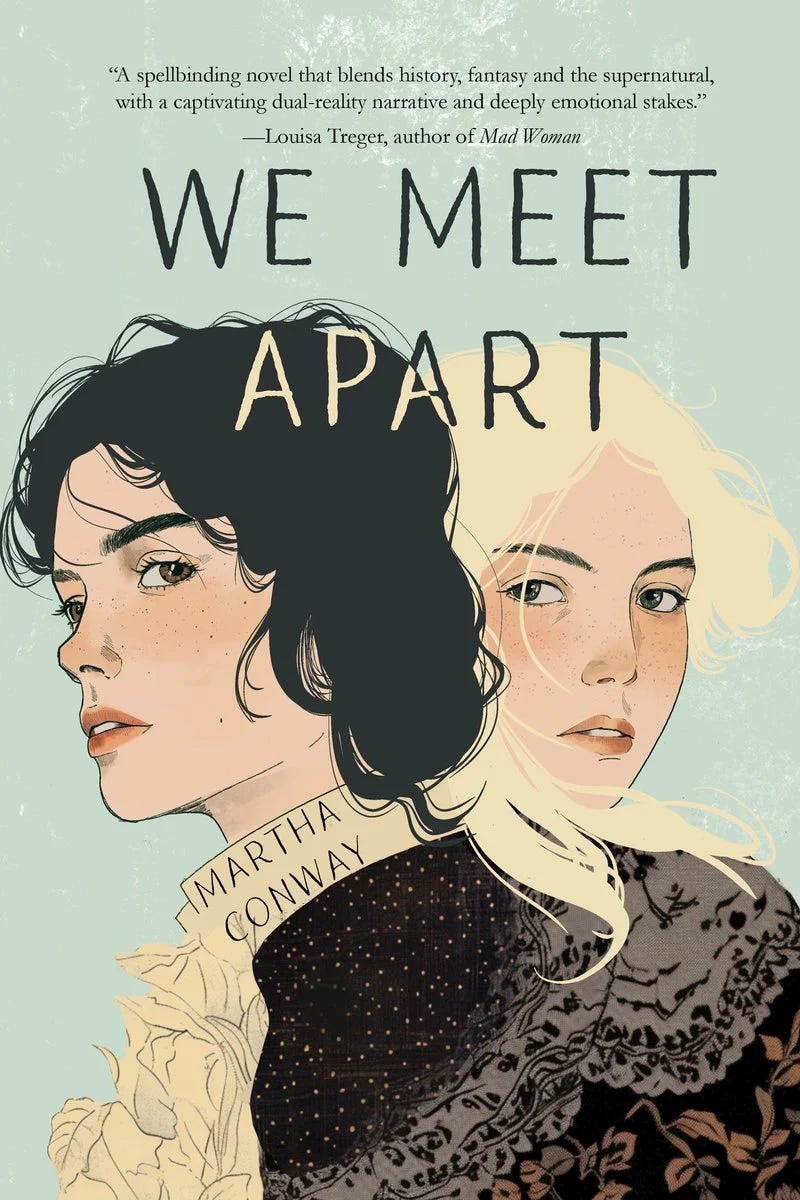
From that encounter came We Meet Apart, a novel enchanted with “what if.” It is a book about crossings, between nations, between eras, between grief and imagination, between the living and those who refuse to remain entirely gone. Martha divides the Irish midlands of the nineteen-forties into two coexisting worlds. In one is the Ireland we recognize, damp, green, exhausted by its own history. In the other, Nazi Germany has invaded and occupied the island during the Second World War. The premise has the machinery of alternate history. But Martha Conway’s true subject is not geopolitical strategy. It is sorrow, and the way sorrow rearranges the furniture of reality.
The title came to her through Emily Dickinson, whose line “So We Must Meet Apart” furnished the novel with its governing ache. Martha told me she was following Ray Bradbury’s advice to read poetry before sleep when she encountered the phrase. One can see why it stayed with her. It has the peculiar Dickinsonian quality of being both intimate and cosmic, like a whisper delivered from the far side of a closed door. In her novel, between two sisters, Gabby and Sabine, who inhabit adjacent versions of the world and meet only in brief, twilight visitations. Their encounters suggest that the boundaries we trust most, between past and present, self and other, death and life, may be less fixed than we pretend.
Martha grew up in a household of six sisters and no brothers, and she writes sisterhood not as decorative affection but as a binding legal condition of the soul. Sisters in her work are rivals, witnesses, protectors, interpreters, and sometimes jailers. They know too much, forgive too slowly, and remember everything. This lived knowledge keeps the novel from drifting into abstraction. We Meet Apart is grounded in the emotional practicalities of kinship: who was loved, who was left, who gets to tell the story afterward.
Whether the novel is a ghost story, a multiverse tale, or a psychological reckoning is almost beside the point. Martha Conway wisely leaves the door ajar. What matters is the feeling that loss does not end a relationship. By the close of We Meet Apart, absence has become not an emptiness but a country, difficult to enter, impossible to leave, and strangely familiar once we arrive.