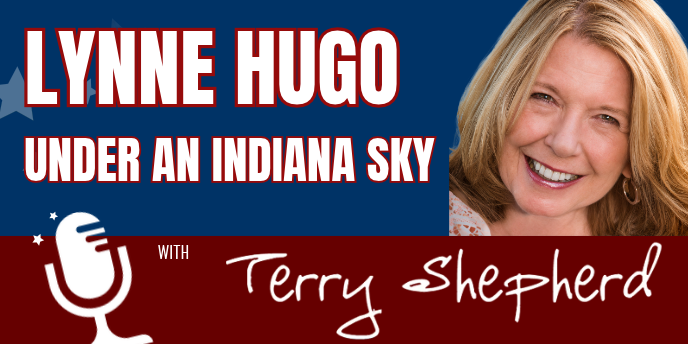
Hear the Conversation | Get the Book
When Lynne Hugo told her father that she wanted to study creative writing, he advised her to leave college with a “salable skill.” Lynne majored in English and psychology. She went to graduate school, and became a psychotherapist. She also wrote seventeen books. The two occupations have proved compatible, although Lynne keeps a firm rule about what can travel between them. Her patients’ lives stay in the consulting room. What years of listening have given her writing persona is an ear for the way people talk when they have several feelings at once and would prefer to admit to only one.
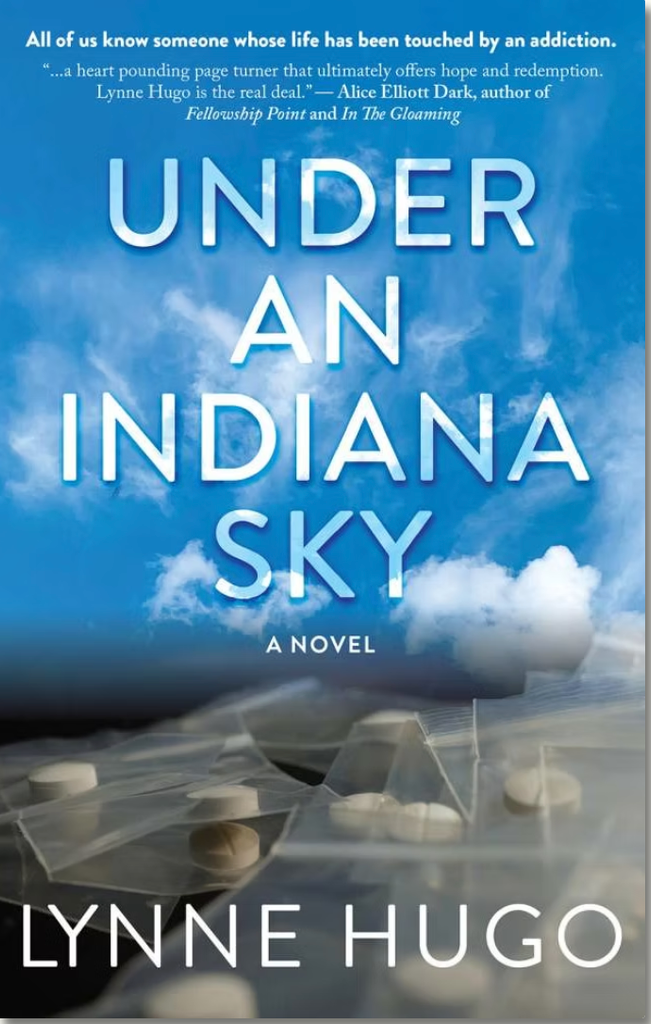
In Under an Indiana Sky, Lynne puts that ear to work in rural southwestern Indiana. It’s 2013, and a young couple’s opioid addiction is becoming harder for the people around them to explain away. The story moves among four women. A sister whose suspicions are sharpening, a mother who has doubts of her own, and a bar owner who has reason to be alarmed. The fourth is Julie, who is fourteen, an age at which adults are apt to assume that a child who says little has heard very little. Julie has the advantage of being routinely underestimated.
Lynne’s first two books were poetry. They taught her to notice how much a sentence could do once she took half the words out. “Don’t use 25 words when maybe 12 would do,” she says. She takes a similarly practical view of writer’s block. Open the file. Sit down. The endings she has in mind when she starts a book seldom make it to the final draft
Some of the novel’s most intimate drama comes from the ordinary work of looking after someone. Denise and Angie care for their elderly mother while their family is contending with addiction, and the obligations don’t take turns. There is always something that needs doing. This is one of the ways denial can persist in a family full of people who are paying close attention. A person you love is in trouble, and there’s a practical thing you can do for them today. Doing it can be a relief, even when it leaves the larger trouble where it was. Lynne understands addiction as a treatable illness, and she gives the people who live alongside it room to be angry, tired, and loving during a single conversation.
In Under an Indiana Sky, she makes room for forgiveness without requiring anyone to feel especially forgiving. Sometimes the change is small enough to escape the notice of everyone except the person making it. You think you know why someone did what they did. Then, for a moment, you wonder what you might have missed.