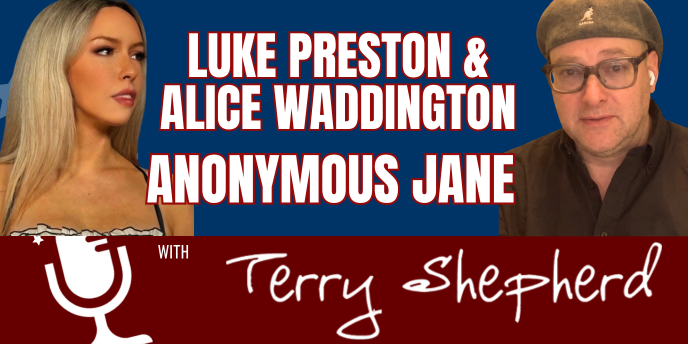
Hear the Conversation | Get the Book
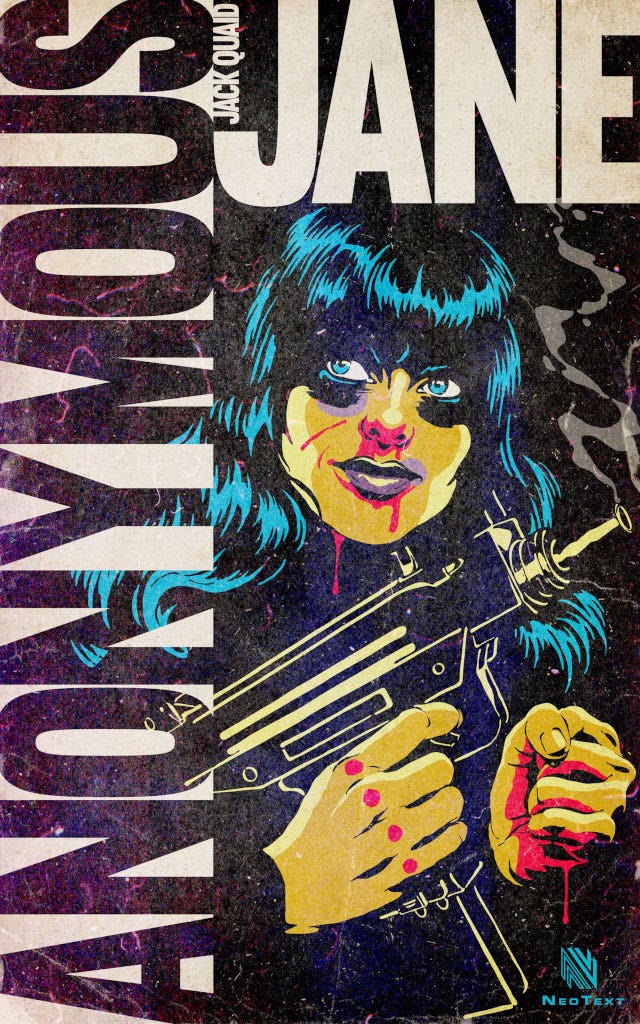
Anonymous Jane, the collaboration between Australian novelist Luke Preston and Spanish film director Alice Waddington, appears to belong to that highly kinetic family of thriller that does not so much begin as detonate. Its heroine is not introduced with the polish of a franchise icon or the suave indifference of a tuxedoed assassin. Jane arrives already under pressure. She is a fixer, a spy, a weaponized problem-solver. Then the machinery of genre does something startlingly intimate. It gives her two diagnoses at once: pregnancy and terminal illness.
That collision is the engine of the project. Preston, who has written as Jack Quade, began with a dissatisfaction familiar to anyone who has watched James Bond save the world and still seem emotionally untroubled by dinnertime. Bond changes the world around him, Preston tells me, but rarely changes himself. Jane was conceived as the rebuttal. Her mission is not merely geopolitical. The stakes have moved from the map room into the body.
Waddington recognized, almost immediately, the cinematic charge in that premise. She speaks of the book’s propulsion, but also of its unusual tenderness. Here was the possibility of a female action protagonist who was not merely invincible in better boots, but wounded, funny, dangerous, and physically unraveling. The point was not to sand down Jane’s contradictions. The point was to let them throw sparks.
What makes the Preston-Waddington partnership intriguing is that each artist seems to bring what the other gladly leaves out. Preston is a velocity merchant. He writes quickly, outlines obsessively, and talks about story with the practical impatience of someone who distrusts ornament when a door can be kicked in. His influences, from Raymond Chandler to Johnny Cash to AC/DC, show up less as quotation than as stance: swagger, gallows humor, and an instinctive refusal to bow before authority.
Waddington, by contrast, sees the architecture around the explosion. She talks of brutalist buildings, Russian visual codes, gilded cages, Alexander McQueen darkness, Galliano eccentricity, and the familiar female-action catsuit being remade into something stranger and more textured. For her, Jane’s world is not a backdrop. It is a trap with wallpaper.
The adaptation process, as they describe it, is less a handoff than a negotiation between pulse and image. Waddington has co-written with Preston, making changes not as acts of betrayal but as expansions of the screen universe. Even Jane’s nationality becomes a practical and philosophical question, because nationality alters backstory, language, rhythm, and casting possibility. Fidelity here means preserving the reason the choices mattered.
Most action films claim that their violence is character driven. Waddington makes the claim sound unusually literal. Jane fights differently depending on what she feels, whom she faces, and how badly her body is failing her. Kali blade work, Muay Thai punches, judo throws. These are not merely techniques. They are emotional grammar.
In the end, Anonymous Jane seems less interested in whether Jane is an antihero than in whether heroism can survive inside moral complication. Preston is clear: Jane is a hero because of what she does. That may be the collaboration’s real thesis. Style matters. Spectacle matters. But in the smoke, the blood, the satire, and the brutalist shadow, character is still what pulls the trigger.