

Hear the Conversation | Get the Book
For much of her life, Lena Fein lived according to a grimly efficient bargain: if the heart could not be protected, perhaps the intellect could be weaponized.
She got the grades. She mastered the systems. She became a success. A UC Berkeley-trained engineer, a high-tech executive, a wife, a mother, a woman who knew how to keep moving. But “Shattering the Mirror,” her searing memoir, is not about success as we usually define it. It is about what success can conceal.
Lena’s childhood was a house of polished surfaces and private terror. It was a place where cleanliness had the force of religion and a mother’s volatility could turn ordinary rooms into sites of danger. One of the book’s primal images arrives early. Lena, at two and a half, was hurled toward a window by her sister, grabbing at drapes before glass and blood and blankness interrupt memory. Her nose is severed and reattached. Trauma often preserves precisely what ordinary life forgets. The towel. The command not to let go. The doctor’s face. The bright light.
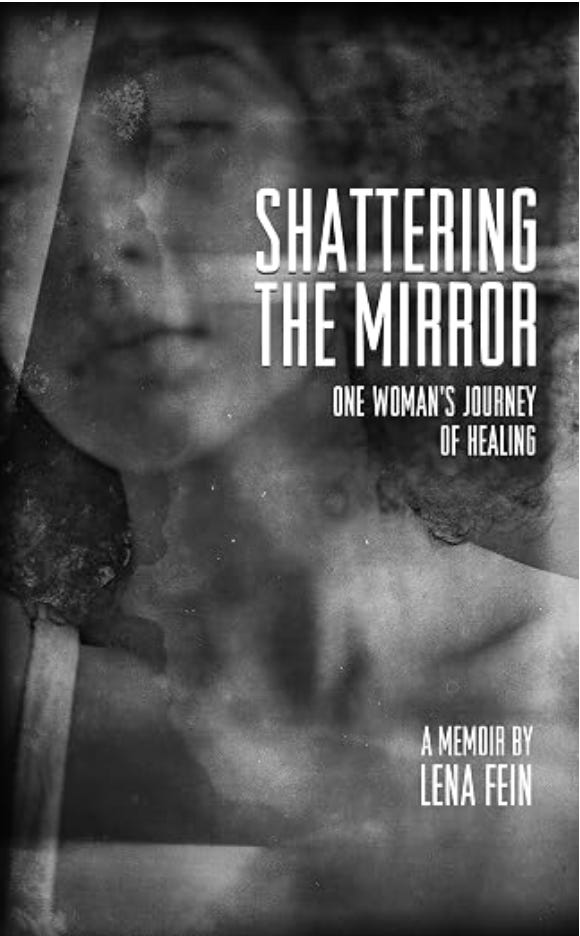
The title, then, is not decorative. “Shattering the Mirror” is Lena’s metaphor for distorted selfhood. A child looks into the mirrors supplied by family and sees monstrosity, clumsiness, ugliness, badness. She believes the reflection because children do. Later, in first or second grade, after writing privately about a crush, Lena’s diary is discovered and read aloud by her mother before the family. The punishment is not only humiliation. It is exile from the self. From that day, she tells me, something in her stopped speaking personally. She became fluent in achievement instead.
What gives the memoir its force is not simply the inventory of harm, but Lena’s refusal to leave the story there. At fifty-one, beside her intubated, dying mother, she sees something in the older woman’s eyes that she interprets as an amends. Whether it was apology, projection, grace, or the body’s last loosening of its defenses matters less than what it opened in Lena’s heart. Forgiveness did not arrive as absolution. It arrived as sensation, as a strange and unfamiliar residence in the soul.
The second half of Lena’s life becomes a counter-education. She leaves engineering. She learns to dance without rules. She lets her curly hair be curly. She works at hospice bedsides. She discovers that a voice, like a life, can be reclaimed not by force but by presence. Her wisdom is not sentimental. She understands boundaries. She knows that compassion is not the same as naïveté. But she also knows that a life built entirely around defense is still a kind of prison.
“Shattering the Mirror” is a memoir of late rescue. Its Lena Fein’s radical claim that healing need not be young to be real. Her story insists that wholeness can come after decades of silence, after careers and marriages and motherhood, after the rooms of childhood have been locked and relocked. The mirror breaks. The face remains.
And, at last, it is seen.