

Hear the Conversation | Get the Book
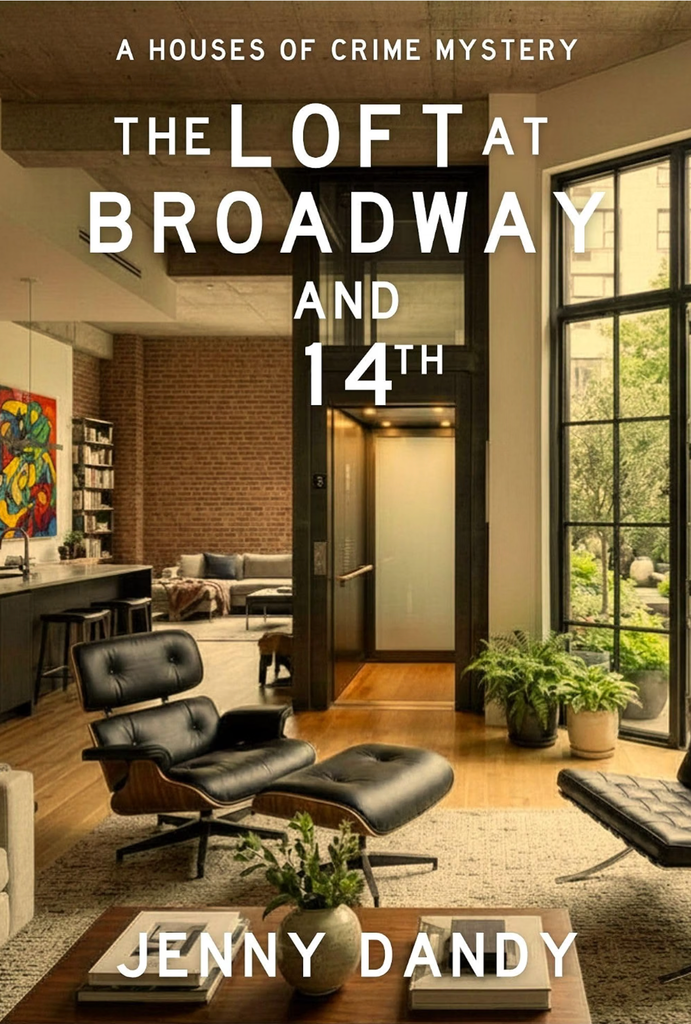
From her home in the Rocky Mountains, Jenny Dandy can contemplate New York with an advantage unavailable to most New Yorkers: she does not have to go outside and deal with it. The city where she lived after college has remained in her imagination. Its geography is sufficiently intact to be recognizable yet sufficiently negotiable to accommodate additional structures wherever one becomes necessary.
This is a useful arrangement for a crime novelist. In “The Loft at Broadway and 14th,” the third installment of Jenny’s Houses of Crime series, Manhattan offers its customary inducements to reinvention. There is also the possibility that your protagonist’s latest reinvention will attract federal attention.
Ronnie Charles, a thief attempting the difficult transition to legitimate employment, has already survived homelessness, diamond-bracelet theft, and a kidnapping. After such an apprenticeship, an online collectibles business might reasonably look like a career opportunity.
Its proprietor, Trip Moreaux, operates from the loft of the title. Unfortunately, the collectibles business also launders Bitcoin for Russian organized crime. Trip supplements this enterprise by extracting money from lonely widows through romance scams. His principal literary instrument is bad poetry. It reminds us that aesthetic failure need not preclude commercial success.
Ronnie’s counterpart is Frank Jankowski, a suspended FBI agent whose professional disgrace has settled into depression. Seeking usefulness, he approaches a homeless-outreach program. Rejection ensues because he looks too convincingly like a policeman. He subsequently becomes a companion to elderly women, work that requires a different sort of surveillance.
In one dusty apartment, folded onto a small couch with his knees approaching his ears, Frank discovers that his companion is being fleeced by Trip’s operation. Ronnie’s involvement presents him with an opportunity. He would like his old life back, and she might furnish the evidence required to retrieve it. His interest in justice becomes complicated by an interest in reinstatement.
Jenny researches these arrangements through Reddit, FBI court filings, and the internet’s immense archive of misapplied human ingenuity. For atmosphere, she watches YouTube videos of people walking through New York. The method supplies street noise and incidental detail without requiring airfare.
She is less inclined to make readers accompany her through every technical discovery. Ransomware must be understood before it can be rendered unobtrusively. The Russian mafia of Brighton Beach, she notes, is less a unified organization than an assortment of quarrelling fiefdoms. Properly researched disorder requires considerable organization.
Editing supplies another discipline. Jenny Dandy keeps a “spare parts” folder for passages that no longer belong. The folder permits writers to remove something beloved without quite admitting that it is gone.
What draws her back to writing is the peace that follows a productive session, a satisfaction she recognizes in a quote from Joan Didion’s account of the work. “I hate writing. I love having written.” Her next project moves west and into a serial killer’s perspective. For now, the mountains provide the quiet, while her characters negotiate the consequences of wanting money, employment, affection, and another chance in a city where each remains available at a price.