
Hear the Conversation | Get the Book
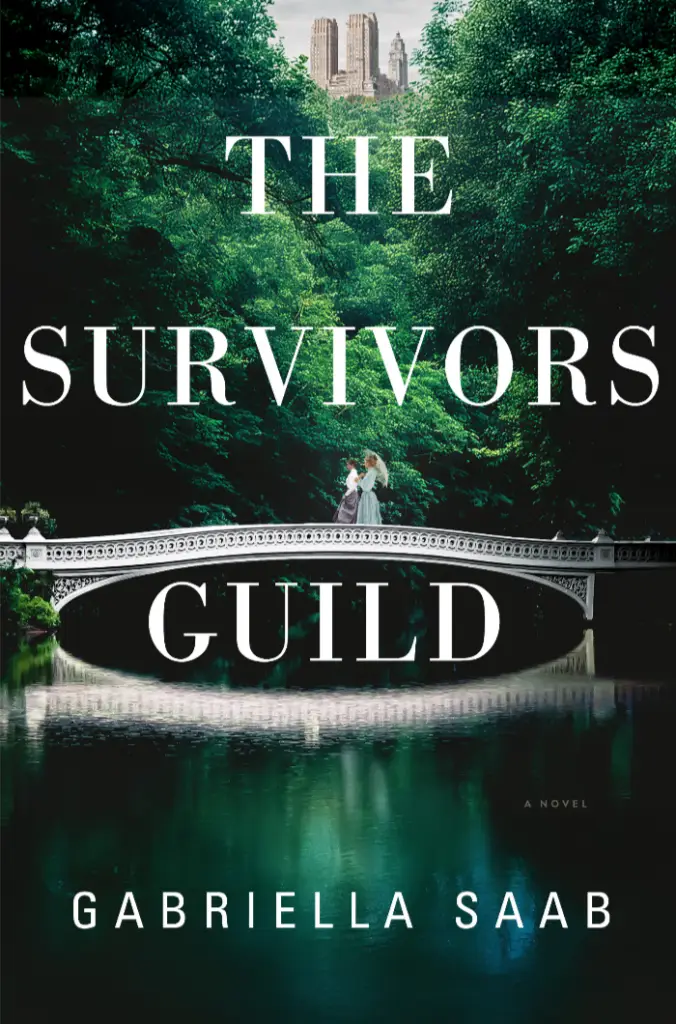
In Gabriella Saab’s The Survivors Guild, the Titanic is not so much a ship as a threshold. We know before the first page turns what history has already decided. The iceberg, the lifeboats, the black water, the terrible arithmetic of class and chance. But Gabriella’s novel begins where the familiar story usually ends, with the living required to become human again.
The premise is at once intimate and expansive. Nabiha “Bea” Nohra, a Lebanese woman bound for America in search of work, hopes to earn enough to bring her family across the ocean. Marguerite Ashby, a New York heiress, is sailing home toward a marriage arranged to preserve her family’s social standing. When the ship goes down, Bea saves Marguerite’s life, and the two women become responsible for an unclaimed baby boy. Out of this improvised obligation comes a committee, a household, a mystery, and finally something resembling a chosen family.
Gabriella told me the book grew from a discovery she made years ago at a Lebanese-American cultural conference, where she first learned that Lebanese passengers had been aboard the Titanic. That fact startled her. It also stayed with her. She became fascinated by the aftermath, especially for immigrants arriving in a country where they had few resources, little protection, and no guarantee of welcome. Bea’s story carries that burden. She is not merely poor, nor merely brave. She is someone for whom love has become duty, and duty has become exile.
Marguerite, meanwhile, is trapped in a different kind of cabin. Her wealth has softened her life also imprisons it. She has been trained for display, marriage, and obedience, and she is naive in the way only the carefully sheltered can be. Bea and Marguerite clash because they understand survival differently. They endure because they want the same forbidden things: agency, friendship, tenderness, and the right to choose the shape of their own lives.
The baby gives the novel its pulse. Inspired by real accounts of unclaimed children after the Titanic, Gabriella transforms historical curiosity into emotion. In caring for him, Bea and Marguerite reveal themselves. Bea, guarded with adults, can speak honestly to an infant who cannot answer. Marguerite, untested and uncertain, learns that charity is not the same as love, and that society’s committees may be less useful than the inconvenient intimacy of actual care.
The title’s double meaning is elegant. A guild suggests labor, craft, mutual obligation. It also glimmers with the Gilded Age. This is an era of American History where the polished world defined by old money, rules, exclusions, and women trained to mistake confinement for refinement. Gabriella places her heroines at the edge of change, where catastrophe exposes the weakness of old structures and makes room for new alliances.
What lingers is not the sinking, but the rescue after rescue: women rescuing one another from loneliness, history rescuing the forgotten from obscurity, fiction rescuing fact from the museum and giving it a fresh breath. Gabriella Saab writes historical fiction as an act of restoration. In The Survivors Guild, survival is not an ending. It is the beginning of a more demanding question: what do the living owe one another now?