
Hear the Conversation | Get the Book
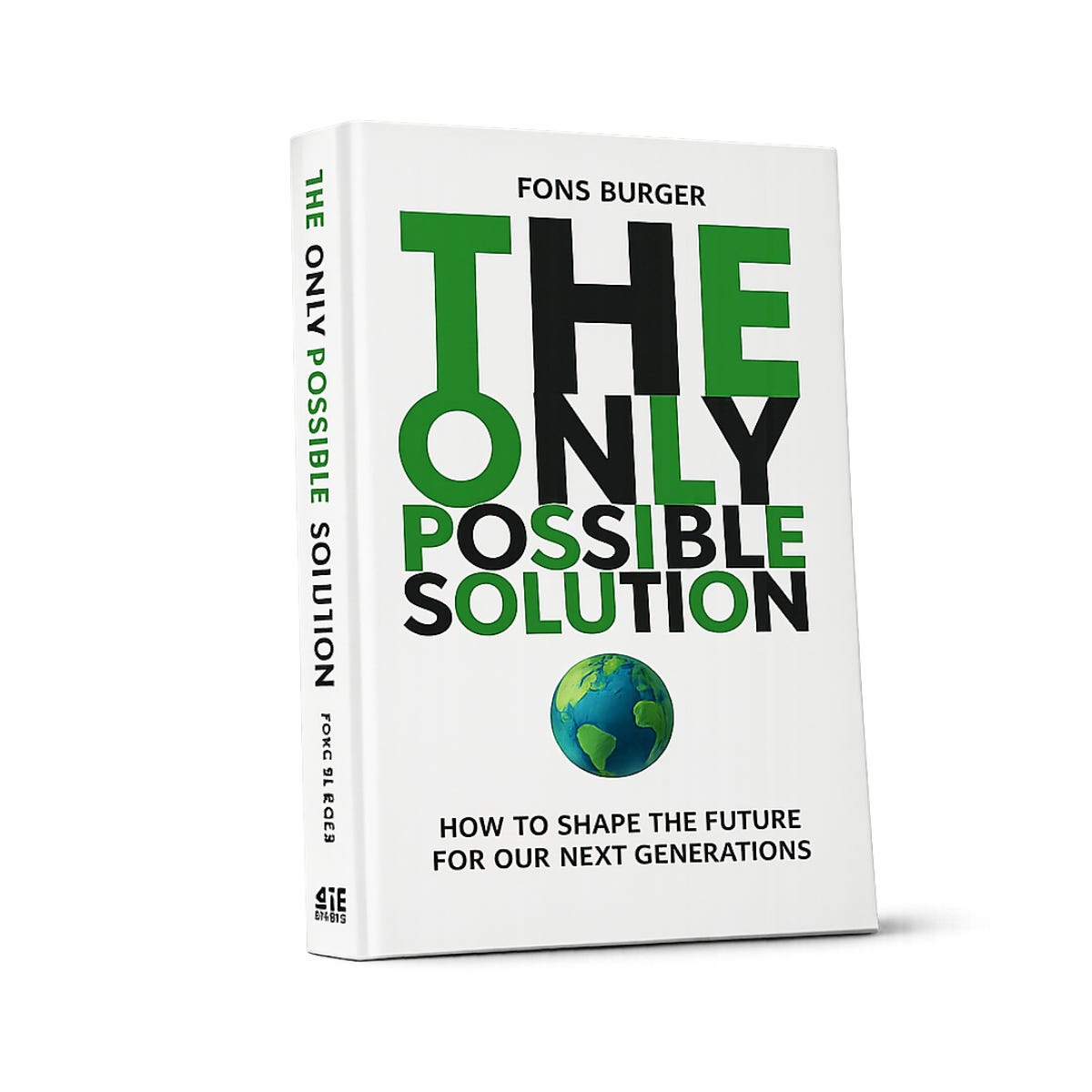
Fons Burger is a Dutch investigative journalist, novelist, and author of nine books. He has reported from some of the defining convulsions of the last half-century, including post-war Vietnam and the long shadow of Watergate. But in his new book, The Only Possible Solution, the question before him is not whether the world is broken. It is whether we can still imagine it whole.
Burger’s argument is bracing in its simplicity. The great crises of our age, climate change, migration, inequality, hunger, education, war, the collapse of shared purpose, are not separate emergencies. They are interlocking symptoms of what he calls a “systematic failure.” To treat them one at a time, he tells me, is like repairing a single cracked window in a house whose foundation has begun to sink. For every problem, he says, there are already brilliant minds with workable ideas. The missing element is not intelligence. It is orchestration.
That insistence on connection gives Burger’s work its unique moral texture. He is not a technocrat peddling a clean chart of outcomes, nor a prophet selling apocalypse by the yard. He is “just a reporter,” searching for people with singular ideas and carrying those ideas into public view. Yet there is something deeply romantic in his pragmatism. He imagines gathering the world’s problem-solvers, perhaps one day at a hotel in Mallorca, where he is part-time farmer, and asking them not what they can accomplish alone, but what they might build together.
Burger’s earlier novel, 2125: The Hibernator, offers the fictional counterpoint to this vision. A man wakes after a century in an experimental coma to find a world where war and climate catastrophe have been overcome. It is a thriller, complete with a missing wife and the ache of lost time, but beneath the machinery of suspense lies a grandfather’s wish. Burger says he wants to give his grandchildren a livable world.
Still, Burger is under no illusion that transformation begins with grand conferences alone. He speaks of “active hope,” borrowing from Joanna Macy the kind of hope that does not sit prettily in a chair but gets up, listens harder and takes action. He is candid about his own compromises. The son of a butcher, he has tried giving up meat entirely and failed. His point is not purity. It is direction. “You make the difference by standing on the good side of the line,” he says.
Near the end of our conversation, Burger arrives at the book’s final destination: love. Not sentimental love, not a greeting-card remedy for geopolitics, but the recognition that what we love, we do not casually destroy. If we loved one another enough, he suggests, we would not bomb each other. If we loved the planet enough, we would not burn what cannot return. In an age fluent in catastrophe, Burger’s proposition may sound almost naïve. But perhaps this is simply what realism looks like before it has been tried.