
Hear the Conversation | Get the Book
There is something almost suspiciously cinematic about Edward McDonald’s career. In the nineteen-eighties, as chief of the Justice Department’s Organized Crime Strike Force in Brooklyn, he spent his days pursuing the men who had transformed extortion, gambling, union corruption, and murder into civic institutions. He prosecuted mobsters, corrupt officials, and labor racketeers with the patience of an accountant balancing a particularly unpleasant ledger. Then Martin Scorsese came along and made Goodfellas, and Ed found himself performing an unlikely role: himself.
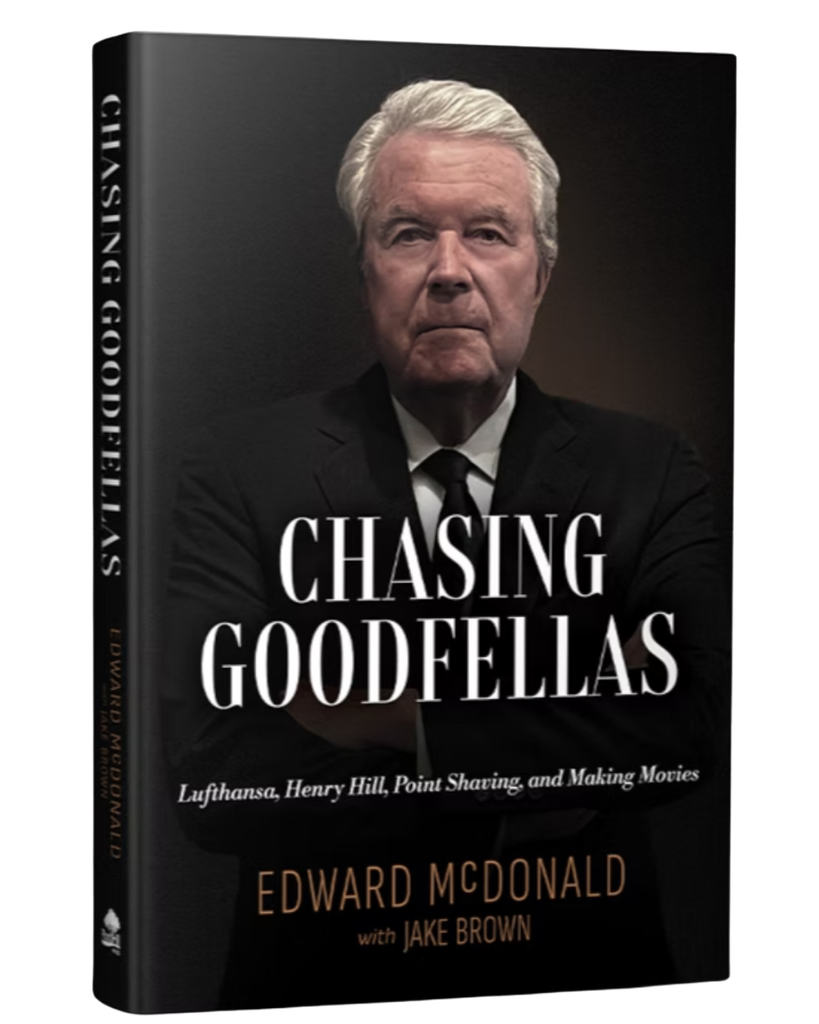
In his memoir, Chasing Goodfellas, written with Jake Brown, Ed revisits the strange territory where federal prosecution, organized crime, and American mythology overlap. The book is less a chronological autobiography than a collection of episodes, many of which possess the improbable logic of fiction. The difference is that Ed had to prove them in court.
Two cases dominate the landscape. The first is the 1978 Lufthansa robbery, then the largest cash theft in American history, carried out by criminals associated with Jimmy “the Gent” Burke. Burke understood a basic principle of organized crime: evidence becomes considerably less troublesome when witnesses disappear. One by one, participants in the robbery were murdered, leaving investigators to reconstruct the crime from fragments, informants, and the nervous testimony of people who had excellent reasons to keep quiet.
The second case began almost accidentally. During a debriefing, Henry Hill, the mob associate whose life would later become the basis for Goodfellas, casually mentioned that basketball games at Boston College had been fixed. What might have sounded like barroom gossip became a federal investigation into one of college sports’ most notorious point-shaving scandals.
Hill is the memoir’s great comic complication. Ed describes him as criminal, informant, nuisance, survivor, and occasional source of astonishingly useful information. Their relationship lasted for years and seems to have required equal parts suspicion, patience, and disbelief. Hill could betray his associates, endanger himself, frustrate prosecutors, and charm nearly everyone in the room, sometimes in the same afternoon.
Ed is particularly good at dismantling the romance Americans have constructed around organized crime. His mobsters are not melancholic patriarchs presiding over candlelit dinners. They are violent men whose influence depends on everyone understanding what will happen if someone refuses to cooperate. The restaurants, social clubs, expensive suits, and elaborate nicknames provide atmosphere. The real governing principle is fear.
This distinction matters because popular culture has spent decades transforming criminal organizations into one of America’s favorite entertainment genres. Ed tells us the fascinating story behind the story, the one involving subpoenas, wiretaps, reluctant witnesses, endless preparation, and prosecutors trying to persuade twelve citizens that the colorful fellow at the defense table was considerably less charming than he appeared.
That Edward McDonald eventually appeared in Goodfellas provides the memoir with an irresistible final irony. A man who spent years pursuing gangsters became part of the movie that helped immortalize them.
The criminals got Scorsese. The prosecutor got to play himself.