

Hear the Conversation | Get the Book
There is something theological about David Kibbe’s approach to getting dressed. For more than forty years, while the fashion industry has busied itself inventing fresh reasons for women to distrust their bodies, David has been preaching a gentler doctrine. Love-based beauty.
David is the creator of the Image Identity System, introduced in his 1987 book, David Kibbe’s Metamorphosis, a work that achieved the afterlife reserved for cult texts and complicated beauty philosophies. He appeared on Oprah, acquired disciples, faded somewhat from mainstream view, and then, in the manner of so many pre-digital prophets, was rediscovered by the Internet. Today, social media is populated by young women debating whether they are Flamboyant Naturals, Soft Gamines, or Theatrical Romantics with a seriousness once reserved for astrology or graduate seminars.
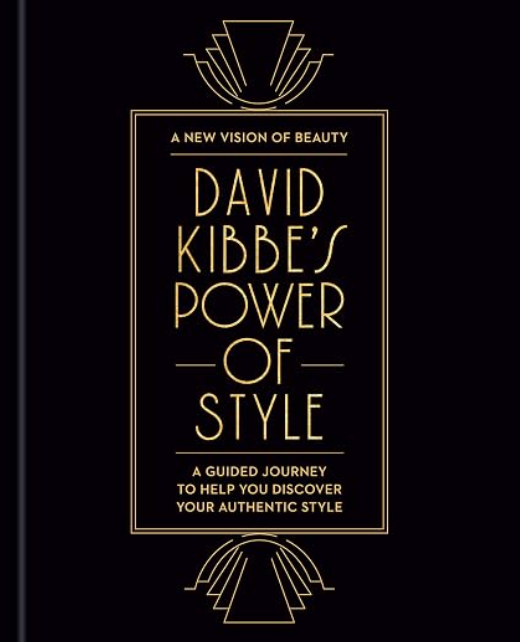
His new book, David Kibbe’s Power of Style, presents the mature version of his philosophy, which he describes as a program of “love-based beauty.” The phrase may sound Californian, though David grew up in California, Missouri, a town of roughly twenty-five hundred people with one stoplight and, he recalls, sixteen beauty shops. The numerical imbalance may explain something.
As a child, David was a classical-piano prodigy, but the solitude of the concert life failed to appeal to him. He preferred people, performance, and the strange intimacy of transformation. Fashion became his instrument. Style, he tells me, is not merely clothing but the physical expression of energy, a means of turning the invisible self outward.
This places him at odds with an industry whose economic model depends largely on dissatisfaction. Fashion has traditionally offered a parade of corrective instructions: elongate this, conceal that, create the illusion of something you do not possess. Bodies become architectural mistakes requiring camouflage.
David rejects the premise. Nature, he argues, prefers variety. A garden would be intolerable if every flower were expected to resemble the same rose.
His practical methods occasionally resemble improvisational theater. Working with his wife, the award-winning actress, author and teacher, Susan Slavin, he asks clients to make dream boards and imagine alternate lives where those dreams can come true. You might be a veterinarian specializing in birds, invited to a society gala, with five thousand dollars to spend on clothes. Practicality is temporarily forbidden. The fantasy is meant to slip past the internal accountant who has been keeping a ledger of flaws.
From there, David asks clients to regard themselves almost as works of landscape art. Coloring is paint. The body is sculpture. Angularity should not be softened into apology. Curves need not be disguised. A woman with sharp geometry might invoke Katharine Hepburn. One with voluptuousness might borrow something from Marilyn Monroe or Quinta Brunson.
His favorite metaphors can become charmingly zoological. A Pomeranian, after all, need not aspire to become a German Shepherd.
There is an old-fashioned streak beneath the metaphysics. David believes in dressing up. He dislikes the contemporary drift toward permanent casualness and regards style as a form of consideration, both for oneself and for the room one enters.
But clothing, finally, is almost incidental to his argument. The larger project is psychological. He wants people to stop treating their bodies as failed drafts of somebody else’s design.
Self-acceptance, in David’s formulation, is merely the beginning. The destination is something more exuberant, more theatrical, and perhaps more difficult in an age built upon comparison.
He calls it “self-celebration.” In a world with an epidemic of low self-esteem, David Kibbe’s Power of Style may be just the prescription.