

Hear the Conversation | Get the Book
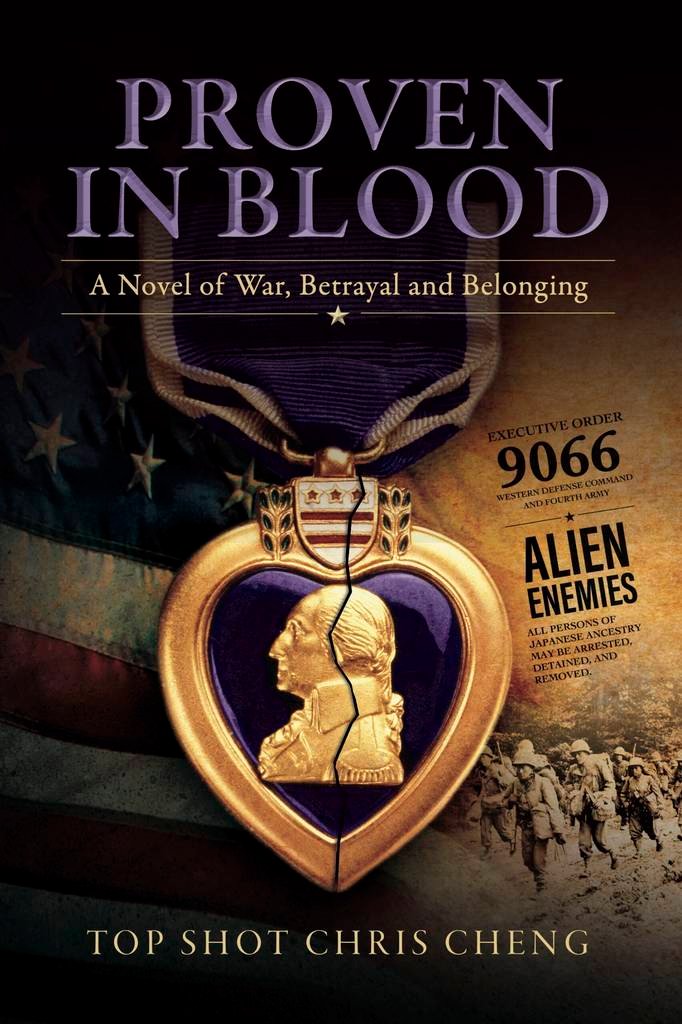
Six years ago, Chris Cheng was preparing to demonstrate vintage Second World War firearms on a televised talent show. Chris, a self-taught marksman and former tech worker who had won the History Channel’s Top Shot, wanted to give the act a personal connection. He searched for “Guns of World War II Asian Americans” and found a history he had never encountered in a California classroom.
The search led him to the 100th Infantry Battalion and the 442nd Regimental Combat Team, units composed largely of second-generation Japanese Americans, or Nisei. Their record of combat honors was extraordinary. So was the circumstance in which many had entered the Army. After Pearl Harbor, the United States had forced roughly 120,000 people of Japanese ancestry from their homes and confined them in camps. Young men whose families had lost their freedom volunteered to fight for the country responsible.
Chris came upon this story as the pandemic began and anti-Asian attacks unsettled his life in San Francisco. He is of Japanese and Chinese descent, and the distance between those soldiers’ experience and his own suddenly seemed smaller than the decades separating them. What began as research for a television appearance grew into Proven in Blood, his debut novel.
Its central character, Daniel Tanaka, is a star pitcher at U.C. Berkeley before the war redirects his future. Daniel’s journey gives Chris room to consider a decision that can look simpler from a safe historical distance. A nineteen-year-old may love his country, fear for his family, resent what has been done to them, and still choose to enlist. None of those feelings cancels the others. The novel’s question is how he carries them into combat.
Chris also focuses on divisions among the soldiers themselves. The Hawaiian “Buddhaheads” and mainland “Katonks” arrive with different habits and experiences, and shared ancestry does not immediately make them a single community. In Italy and eastern France, they must learn to depend on one another while facing the dangers of war. To understand the places where they fought, Chris walked the battlefields and spoke with elderly Europeans who still commemorate the men who helped liberate their villages.
That remembrance has its own quiet force. Across an ocean, people gather to honor soldiers whose neighbors and government had questioned their place in America. The villagers remember what the men did. At home, the fuller story of what was done to them, and what their families endured while they served, has been easier to leave out.
Chris Cheng points out that parts of Japanese culture once treated with suspicion have since become familiar pleasures in American life. Tastes can change quickly. Belonging is a deeper matter and Proven in Blood asks readers to sit with the gap between a country’s ideals and its treatment of the people asked to defend them.
It’s a place where the true heroism and well deserved honor lives.