
Hear the Conversation | Get the Book
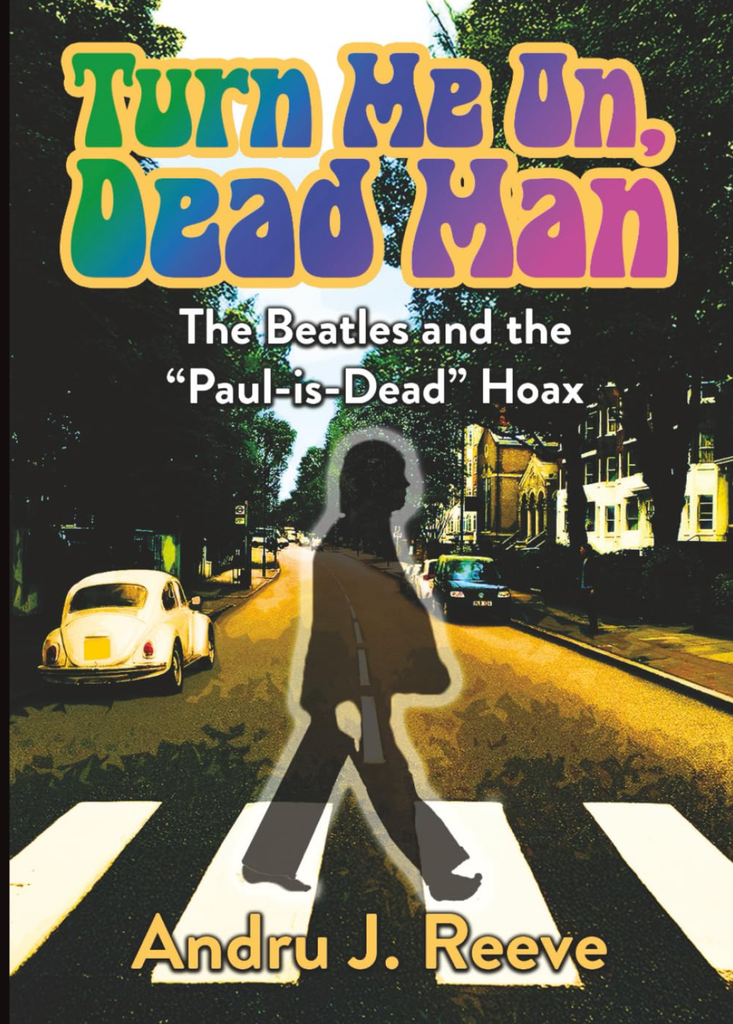
In the autumn of 1969, Americans discovered that a record player could double as a forensic instrument. Run a Beatles song backward, examine an album sleeve with sufficient suspicion, and the cheerful machinery of popular music began producing evidence of death. Paul McCartney, the rumor insisted, had died in a car crash three years earlier. His replacement was a lookalike. Apparently, the Beatles could conceal a death but could not resist illustrating it.
Andru J. Reeve’s “Turn Me On, Dead Man: The Beatles and the Paul Is Dead Hoax” follows this outbreak of amateur detection with the patience its participants rarely possessed. Andru became interested after encountering the story in a Beatles biography. Beginning in 1988, while working at a Washington television station, he wrote letters, made long-distance phone calls and spent his days off at the Library of Congress, reconstructing the rumor.
The hoax found its ideal habitat in the college dormitory, where leisure, marijuana, and access to someone else’s records supplied the necessary research atmosphere. Its investigators, sometimes called “cluesters,” treated the Beatles’ catalog as an elaborate confession. On “Sgt. Pepper,” McCartney faced away from the camera. A uniform patch supposedly announced that he had been officially pronounced dead (In reality, the patch letters were OPP for the Ontario Provincial Police). The walrus, listeners confidently explained, symbolized death in a distant culture. The less familiar the culture, the more useful it became.
Detroit provided an amplifier. On October 12, Tom Zarsky, then a student at Eastern Michigan University, brought the alleged clues to the attention of the WKNR-FM’s Russ Gibb. Soon afterward, University of Michigan student, Fred LaBour published a satirical “Abbey Road” review in the Michigan Daily, supplying details that escaped their comic origins and entered the public record as revelations. Satire had encountered an audience willing to do its paperwork.
McCartney, meanwhile, was in Scotland with Linda, enjoying the sort of privacy that celebrity ordinarily makes impossible. His absence became incriminating. So did silence. A denial could presumably have been dismissed as the work of the substitute. Like many conspiracies, this one offered its believers the satisfaction of an argument that could survive any answer.
There were commercial opportunities. Novelty recordings appeared. Terry Knight’s “Saint Paul,” published by Lennon and McCartney’s own company, supplied another suggestive coincidence. A rumor about the disappearance of a pop star had acquired its own soundtrack.
Andru Reeve’s interpretation is that much of this amounted to a communal parlor game. The pleasure lay in gathering around the turntable, hearing what someone else had heard, and feeling briefly admitted to a secret. Belief could be provisional, Participation was immediate.
Seen from today’s screens, the episode feels both quaint and familiar. The technology has changed, but the appetite for patterns remains. What distinguishes these young detectives is the intimacy of their equipment. A needle, a groove, a cardboard sleeve passed from hand to hand. They wanted the Beatles to mean more than anyone had said. For a few remarkable weeks, even Paul McCartney’s continued existence seemed too ordinary an explanation for them to accept.