

Hear the Conversation | Get the Book
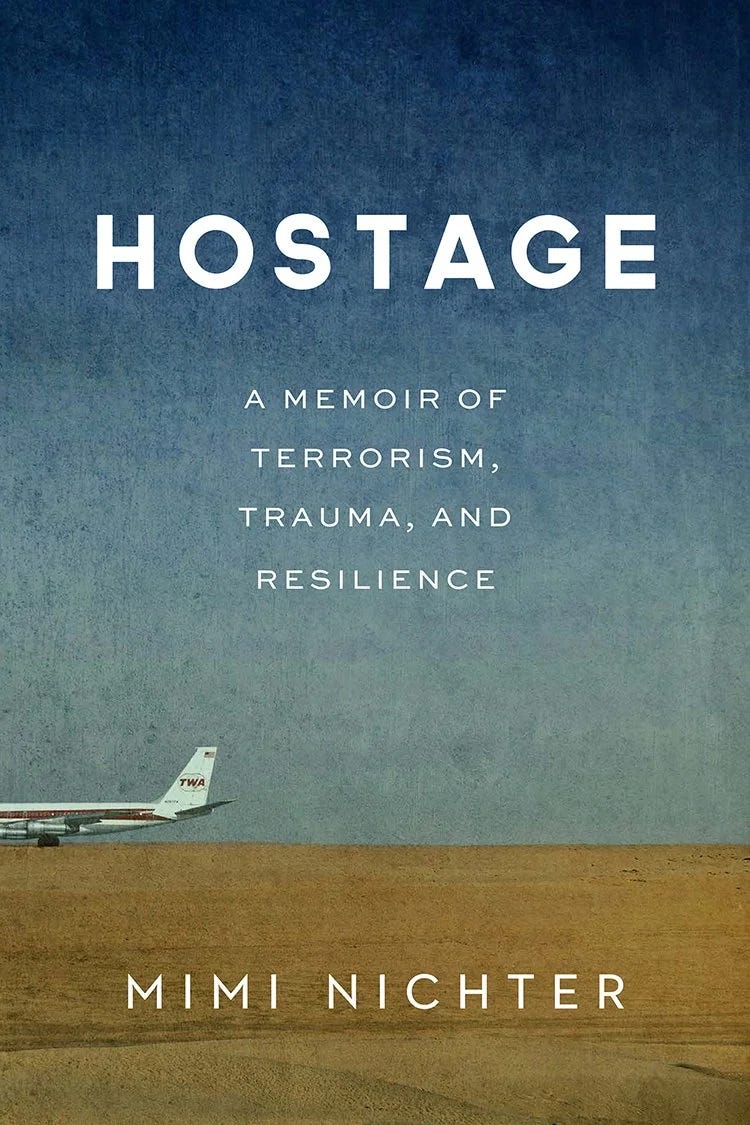
In the autumn of 1970, Mimi Nichter boarded a flight home from Tel Aviv carrying the small, bright expectations of a college senior. She had spent the summer on a kibbutz, picking fruit under an unrelenting sun, and imagined nothing more dramatic than returning to campus with stories and perhaps a new romance. Instead, she would soon find herself in a green mini dress in the Jordanian desert, watching the aircraft that had carried her toward routine explode into a spectacle of political theater.
Her memoir, Hostage: A Memoir of Terrorism, Trauma, and Resilience, revisits the six days she and other passengers spent confined aboard a hijacked plane, followed by weeks of captivity in Amman. The hijacking, orchestrated by the Popular Front for the Liberation of Palestine, would become a pivotal moment in the era’s escalating acts of international terror. For Dr. Nichter, now a celebrated academic and anthropologist, the event unfolded less as headline history than as a sequence of intensely personal encounters, anxieties, and moral confusions that resisted easy classification.
Inside the sealed aircraft, strangers became mirrors for one another’s fears. Later, the claustrophobia of captivity bred what she describes as “contagious emotions.” One passenger buoyed spirits with jokes about President Nixon grieving at their funerals, humor offered as a fragile shield against dread. Another retreated inward, drumming silently on an imaginary kit, his mental withdrawal echoing struggles Dr. Nichter recognized from her own family life.
What gives Dr. Nichter’s account unusual texture is the observational patience that would later shape her career in anthropology. Even in crisis, she registered contradictions. Guards supplied candles so Orthodox Jewish women could observe the Sabbath. One young militant lost his life retrieving water during bombardment. Nichter recalls conversations with Palestinian women whose political convictions clashed sharply with her own experience of terror, yet whose humanity complicated the simple villain narrative she might have preferred. The lingering lesson was uncomfortable and enduring. The world, she realized, refuses neat moral borders.
Returning home offered little relief. The language for psychological trauma had not yet entered everyday discourse, and her peers, steeped in antiwar politics, sometimes romanticized the very militants who had threatened her life. Faced with responses that felt detached from the terror she remembered, Dr. Nichter chose silence. The experience, she writes, went into a “hidden box,” sealed but never diminished.
Decades later, as public understanding of trauma evolved, she began the slow work of opening that box. Writing, Dr. Nichter suggests, did not erase fear so much as resize it. Like discovering the machinery behind the Wizard of Oz, the act of naming memories rendered them human rather than monstrous. Resilience, in her telling, does not mean forgetting, but learning to live fully while carrying what cannot be undone.
The memoir arrives at a moment when public discourse again favors certainty over nuance. Mimi Nichter’s story resists that impulse. It insists that even in circumstances shaped by violence and ideology, human complexity persists. And perhaps the most necessary stories, the ones that demand patience and empathy, are those that refuse to let us look away.