

Hear the Conversation | Get the Book
In the dim green hush beneath Madagascar’s forest canopy, sound seems to travel slowly, as if reluctant to disturb the work underway. Vanilla orchids wind themselves up host trees, their pale blossoms offering nothing unless coaxed by human hands. In the absence of the native Melipona bee that performs this delicate task in Mexico, growers here must pollinate each flower manually. One careful gesture at a time, farmers marry plant to plant so that distant patisseries may perfume custards with sweetness.
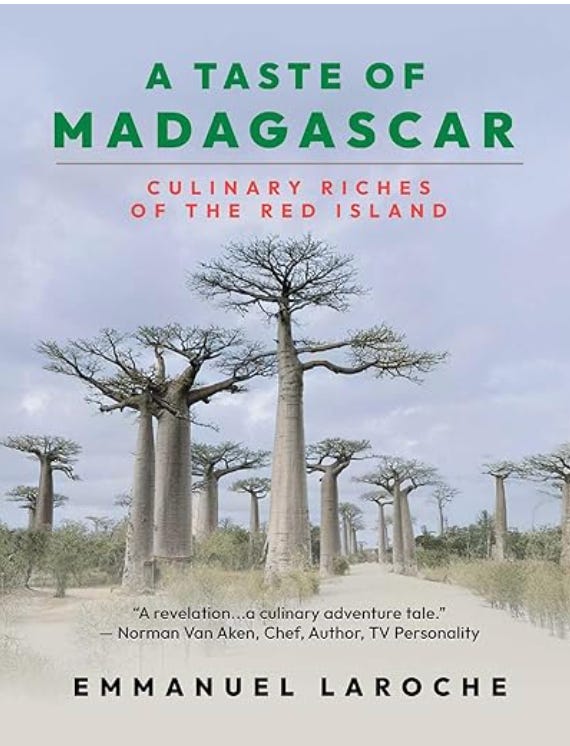
Emmanuel LeRoche first encountered this ritual as an executive. Madagascar, for years, existed for him as numbers on procurement sheets. Eighty percent of the world’s vanilla came from this island. Yet a 2022 visit alongside American chefs shifted his perspective. The trip evolved into a book, A Taste of Madagascar: Culinary Riches of the Red Island, an attempt to translate commerce into something more human, even intimate.
Emmanuel sidesteps the glossy tropics of tourist brochures. Instead, he lingers where livelihoods hang in delicate balance. Honey, for instance, is more than food here. Traditionally harvested by children climbing trees, the practice often destroyed entire colonies in pursuit of the golden reward. Recent conservation efforts encourage permanent hives, allowing bees to survive and farmers to earn steady income. In regions where charcoal production still threatens forests, sustainable beekeeping offers both ecological and economic relief. Patience, Emmanuel admits, is not merely learned but required.
Emmanuel recounts evenings spent on packed earth floors listening to tribal elders describe traditions that seem distant from the polished dining rooms of Antananarivo, where chefs now reinterpret zebu dishes for international diners. Old and new, subsistence and sophistication, coexist in uneasy harmony.
History shadows every page. French colonial rule ended in 1960, but its imprint lingers in depleted forests and economic structures built for extraction. Emmanuel confronts this legacy directly, acknowledging how abrupt independence left communities dependent on systems that offered little guidance toward sustainability. The past, like the forest, resists easy clearing.
Some of the book’s most vivid moments occur away from kitchens entirely. On Nosy Be, Emmanuel walks among ylang-ylang trees as dusk approaches. At precisely the hour when heat loosens its grip, blossoms release their fragrance. The air thickens with notes both floral and creamy, familiar to anyone who has worn fine perfume without ever knowing its origin. Chanel’s signature scent begins here, in humidity and gathering darkness.
Emmanuel LeRoche arranges his narrative like a meal, courses unfolding in sequence. Yet his intention extends beyond culinary appreciation. By introducing readers to honey gatherers, cattle herders, and vanilla farmers, he insists on acknowledging the people behind flavors often consumed without thought. Madagascar, his book suggests, cannot be reduced to exports. It resides instead in smoke curling above cooking fires, soil packed beneath fingernails, and the nearly invisible click of a hand pollinating a single flower at dawn.