

Hear the Conversation | Get the Book
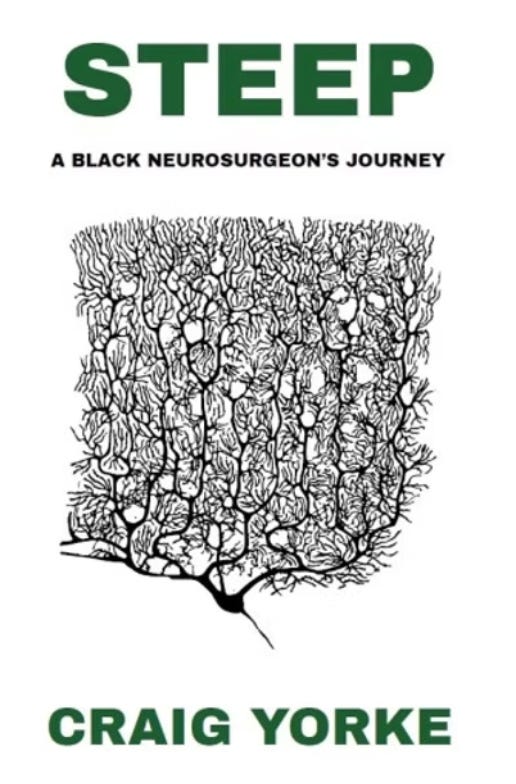
In the quiet, wood paneled chambers of memory, there is often a curious friction between discipline and desire, between the exacting cut of science and the tremor of art. Dr. Craig Yorke’s life, a retired neurosurgeon whose life traced a long arc from the restless streets of Boston’s Roxbury to the wide horizons of Topeka, Kansas, that friction was never merely professional. It was inherited, embedded in family history, and sharpened by the expectations of survival in a country still learning how to see its own citizens clearly.
His memoir, Steeped, reads like the careful unveiling of a life lived under pressure. Dr. Yorke describes his upbringing as a deliberate construction, an effort by parents who understood too well the injuries of racism in early twentieth century Boston. Their answer was not retreat but preparation. Their son would be undeniable. Achievement would serve as armor. Excellence would be protection. Music, discipline, and academic rigor were not extracurricular pursuits but safeguards.
By sixteen, the future Dr. Yorke was performing as a soloist with the Boston Pops, commuting long distances for elite schooling while practicing violin with unwavering obedience. The instrument was both passport and burden. Over time, he felt it consuming him, narrowing his life into something defined less by joy than by obligation. In the turbulence of the 1960s, he closed the violin case and turned toward medicine, seeking another path where precision and purpose might coexist.
Neurosurgery offered its own intensity. The operating room, he writes, carried the urgency of a cockpit in combat. Hours stretched beneath bright lights while he navigated fragile territories of the brain, where a slip could cost a life. The work demanded physical endurance as much as intellectual mastery. For decades he lived within this bunker of responsibility, performing what can feel like a form of modern ritual, holding vigil at the uncertain threshold between survival and loss.
The title Steeped suggests both ascent and immersion. The early climb through medical training was steep indeed, but the deeper meaning lies in the slow infusion of experience, the way a person absorbs history until it colors everything that follows. After retreating from the operating room, Dr. Yorke has returned to the violin, playing each morning with humor about the roughness of his early attempts to regain what was once reflex. He now performs with the Topeka Symphony, not as a young man striving for acceptance, but as someone finally free to play for himself.
One memory anchors the book. During a confrontation, his teenage son, already taller than he was, demanded not orders but honesty. “Don’t tell me what to do, dad. Tell me what you did.” The memoir answers that request, tracing a journey toward a life no longer ruled by fear or ambition alone.
Craig Yorke spent decades studying the independence of brain cells, yet his story reveals that the most delicate operation was separating his own identity from the expectations that shaped him. Only then, he suggests, can life begin to sound like music again.