
Hear the Conversation | Get the Book
By seventy, a person is generally permitted to stop becoming someone else. There are prescriptions to refill, grandchildren to admire and opinions to consolidate. Deborah Hufford became a bestselling novelist. Having spent decades with severe kidney disease suspended above her like the proverbial sword, she eventually endured renal failure and a heart attack. Mortality, which had been issuing warnings, had arrived at the door. The unwritten books began to seem less like ambitions and more like unfinished business.
Deborah grew up riding horses along Iowa’s gravel roads and following old stagecoach trails. It was an education in how the past persists beneath ordinary scenery. Later, teaching as a graduate student at the University of Iowa Writers’ Workshop, she encountered another sort of terrain: the intimidating distance between loving literature and presuming to contribute to it. Nearness to death appears to have made that distance considerably less interesting.
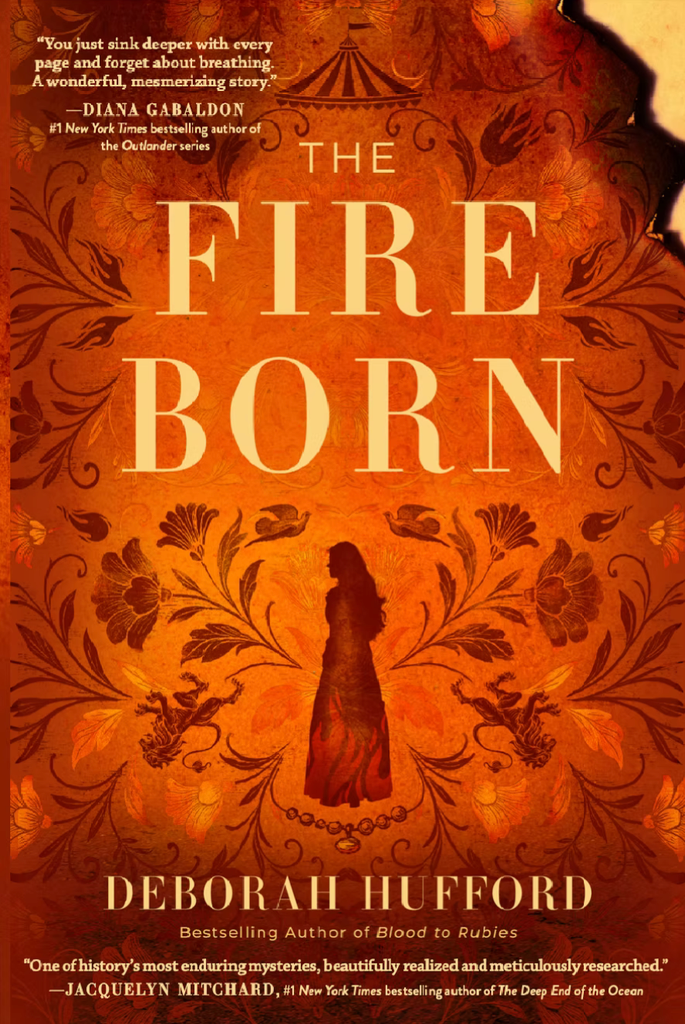
Her newest novel, “The Fire Born,” concerns people whose deaths received considerably less attention than they deserved. The Peshtigo fire consumed roughly a million and a half acres of Wisconsin and killed as many as twenty-five hundred people. It remains America’s deadliest fire. Its misfortune, beyond the obvious, was to occur on the same night as the Great Chicago Fire. Chicago had the advantages of size, prominence, and surviving channels of communication. Peshtigo lost its roads and telegraph lines. Even catastrophe, apparently, needs infrastructure to become news.
Deborah populates this neglected landscape with immigrants, lumberjacks, and circus performers, people whose labor and vulnerability supplied the less picturesque foundations of American expansion. Her historical interests extend to Barnum’s burning Manhattan Museum and the explosion of the steamship Sultana, which killed roughly fifteen hundred people, many of them Union soldiers returning from imprisonment. Survival, in these accounts, is provisional. A man might endure Andersonville only to discover that the journey home had its own arrangements.
A former Better Homes and Gardens editor and the creator of the history blog Notes from the Frontier, Deborah brings an editor’s appetite for particulars to the novelist’s obligation to imagine. Seventy archival images introduce the chapters. Among them is a dead horse, still in its traces, on a New York street. The photograph requires no elaborate interpretation. An animal has worked until it cannot work anymore. The city continues around it.
Such details complicate the familiar pageant of American ingenuity. Deborah follows the early anti-cruelty movement, including rescuers who carried wounded animals and abandoned children in wagons after Chicago burned. Compassion appears here as practical labor, undertaken amid the wreckage of more celebrated enterprises.
“The insatiable is not sustainable,” Deborah observes. It is a judgment on empire-building, but also on the peculiar national habit of confusing accumulation with achievement. Her fiction asks who paid for the progress and who was available to record the bill.
Having survived long enough to begin, Deborah Hufford has chosen the company of the overlooked. There is something fitting about that. A woman who spent decades wondering how much time remained now gives her pages to people history scarcely allowed a moment.