

Hear the Conversation | Get the Book
In 1964, Dr. Mark Rubinstein was a young New Yorker in an Army surgical ward at Fort Bragg, attending to paratroopers whose encounters with gravity had gone badly. The men belonged to the 82nd Airborne. Mark, who had been drafted, belonged to that category of people who discover their vocation while doing something they had not intended to do.
“It was so seminal,” he told me. The ward supplied an education in human breakability. After leaving the Army, Mark completed his premedical requirements at New York University and went to medical school. Eventually, his attention migrated from the damaged body to the mind obliged to inhabit it. Psychiatry offered a particular attraction: symptoms might repeat themselves, but people did not.
“Every patient in psychiatry tells you a story,” he says. Thirty could arrive with depression. The diagnosis established a common vocabulary; it did little to explain how each person had come to need it. Understanding required listening for the particulars, the private sequence of disappointments, accommodations, and losses that made one life unlike another.
Mark became a forensic psychiatrist, a profession in which competing accounts of reality have unusually tangible consequences. He also became the author of twenty-six books. The two occupations share an interest in what people reveal, what they conceal, and what they cannot quite explain to themselves.
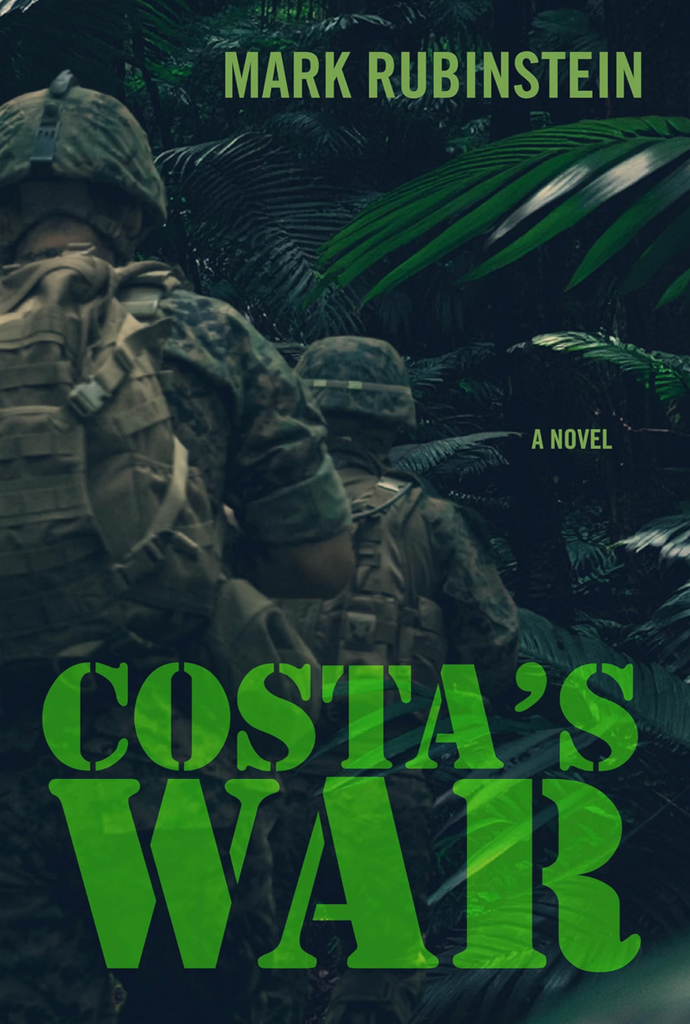
His latest novel, Costa’s War, expands The Foot Soldier, his Silver Benjamin Franklin Award–winning novella. Its protagonist comes from working-class Buffalo, a landscape of railroad tracks and Lake Erie, and enters a Vietnamese jungle whose geography seems designed to defeat comprehension. Heat, mud, leeches, and exhaustion reduce the world to immediate problems. Keeping a rifle clean acquires an urgency that keeping oneself clean has lost.
Then a second lieutenant gives Costa an order that collides with his moral convictions. The predicament interests Mark because obedience, so useful to an army, can become intolerable to the individual soldier. Military authority depends on distinctions between lawful orders and unlawful ones. Recognizing those distinctions under conditions of terror is another matter. Fatigue narrows judgment. Fear makes its own arguments. The man giving the order possesses both rank and the power to make refusal dangerous.
Costa must decide what he can live with, without knowing whether he will live. Expanding the original ten-thousand-word story gave Mark room to examine both the physical experience of combat and its persistence afterward. A soldier may leave the jungle while continuing to organize his inner life around it. Homecoming changes the scenery; it does not necessarily end the war.
Mark’s psychiatric experience lends this inquiry an essential patience. He has spent a career hearing people account for themselves under pressure, sometimes with insight, sometimes with elaborate evasion. Fiction permits him to follow what those accounts leave unresolved.
The reader, meanwhile, enjoys the considerable advantage of a comfortable chair. Costa’s decisions can be weighed without hunger, sleeplessness, or incoming fire. Mark Rubinstein quietly complicates that privilege. We may know the person we hope we would be. The person who would emerge remains, mercifully for most of us, untested.