

Hear the Conversation | Get the Book
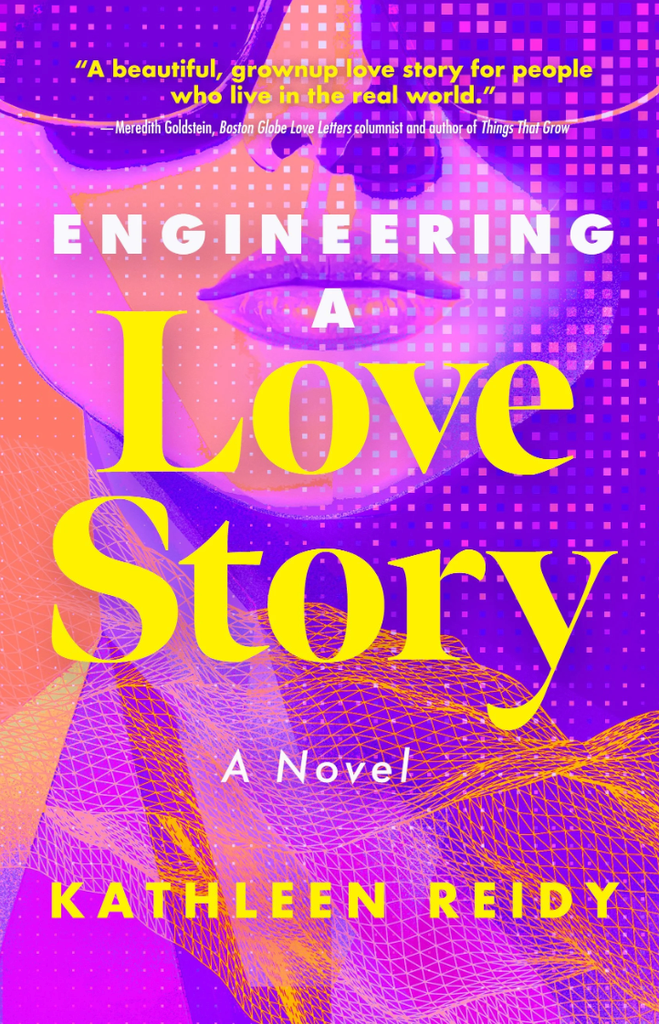
The literary debut is generally imagined as an event involving youth, unreasonable confidence, and an apartment whose rent somebody else is helping to pay. Kathleen Reidy offers a different arrangement. At fifty-five she has worked in corporate technology and become an adult reference librarian outside Boston. And now, she has published her first novel. There are advantages to arriving after the party has started. One has had time to observe the guests.
Her publisher, Sibylline Press, specializes in books by women over fifty. This is a demographic the publishing industry has occasionally treated as though its principal literary function were purchasing other people’s novels. Kathleen’s Engineering a Love Story suggests how much experience this arrangement leaves untapped.
The novel takes place in 2000, when the Internet was making extravagant promises and San Francisco was becoming expensive enough to make those promises seem necessary. Its protagonist, Chelsea LaFave, is a software engineer who has acquired the reassuring inventory of a successful adulthood: professional standing, a marriage, a future with the major decisions apparently settled. Then she begins to question the inventory.
Chelsea comes from working-class Western Massachusetts, where the collapse of the paper mills supplied an education in the difference between security and its appearance. Her ascent into Cambridge technology circles has required intelligence and persistence. It has also required enduring rooms in which a woman’s expertise remains a proposition awaiting male confirmation.
Kathleen knows these rooms. Her corporate background gives the workplace passages the authority of recognition, without requiring the novel to become an extended grievance. Chelsea’s difficulty is more interesting than a bad employer. She has become proficient at building a life whose specifications were supplied by other people.
An impulsive transgression during a business trip disrupts her marriage and sends her toward an uncertain independence. Seth, a counterpart with a life rooted in San Francisco, offers another set of possibilities. His expansive outlook challenges Chelsea’s habits of caution. But the question animating their romance concerns what she can provide for herself, and what that knowledge might allow her to want.
For a woman raised to regard stability as an achievement, choosing love without asking it to function as insurance represents a considerable imaginative leap. Kathleen gives that leap both economic context and emotional consequence.
Her own writing began as a private exercise over four or five years before publication made the undertaking public. There is something appealing about this interval. The manuscript is developed alongside ordinary obligations, without an audience to reassure or discourage its author. Librarians understand that worthwhile discoveries often require patient searching. Kathleen’s skepticism toward artificial intelligence and her preference for evaluating original sources belong to that same disposition.
Kathleen Reidy’s debut draws its force from the accumulated experience that made it possible. Chelsea must learn to distinguish a life that looks settled from one she has chosen. Her creator has already made one such choice, quietly, by continuing to write until she had a book.