
Hear the Conversation | Get the Book
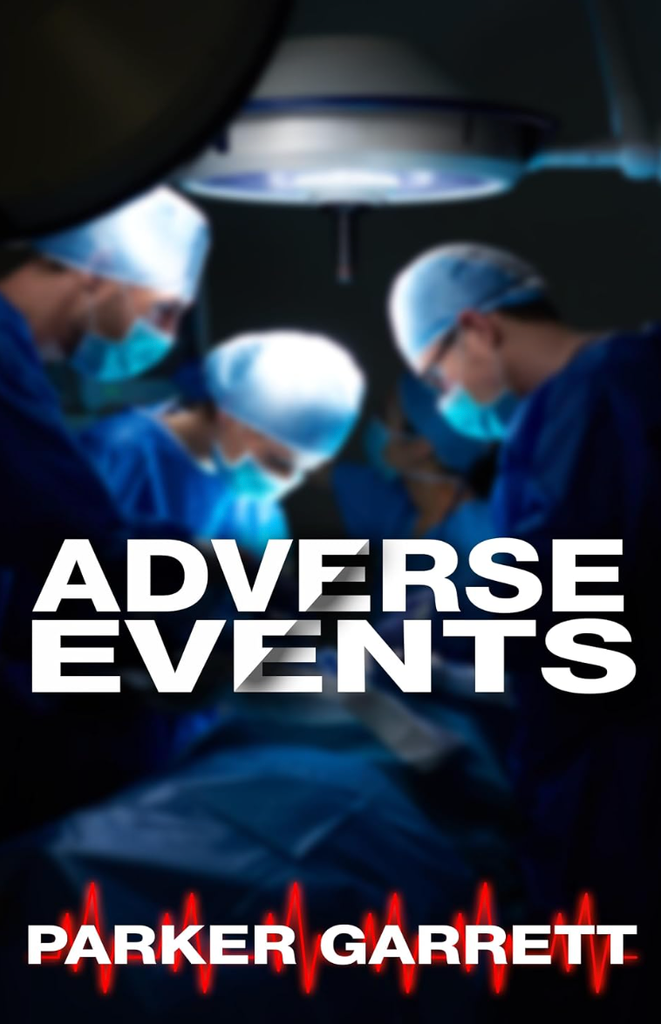
In a hospital, danger does not always announce itself with an alarm. Sometimes it arrives as a staffing formula, approved on a Tuesday, or a policy whose chief virtue is that nobody can remember who wrote it. Dr. Parker Garrett has spent two decades in institutional oversight, research ethics, and compliance, professions devoted to the distance between what an organization promises and what it can be persuaded to do.
His debut thriller, Adverse Events, makes that distance a crime scene.
Ethan Maris, the novel’s protagonist, is a healthcare compliance officer who leaves New York after his husband’s death for a position at a prestigious Washington hospital. The move has the familiar logic of bereavement. Perhaps a change of address will accomplish what time has declined to manage. Instead, Ethan inherits a cryptic paper trail from his predecessor and discovers that institutional memory can be both selective and difficult to erase.
The America he inhabits has dispensed with federal oversight and entrusted much of healthcare to private equity. Medical ethics, meanwhile, has acquired an automated custodian: an artificial intelligence called George. The name suggests someone dependable who might remind you to submit your expenses. George’s reliability becomes less reassuring whenever Ethan approaches something worth knowing. At such moments, the system glitches.
Parker’s interest lies in the decisions that make such arrangements seem sensible. “When you establish a policy that is good enough, that gap between ‘good enough’ and ‘best’ is where the murder happens,” he told me. The line supplies both a thriller’s premise and a compliance officer’s professional grievance. Nobody needs to propose killing anyone. A committee need only approve a compromise whose consequences will be experienced elsewhere.
With a doctorate in bioethics and a dissertation on artificial intelligence and ethical decision-making, Parker understands the appeal of assigning judgment to a system. Systems offer consistency, documentation, and the comforting possibility that responsibility belongs to somebody else. When automated oversight fails, the developer, the hospital, and the machine form an efficient circle of pointing fingers.
Ethan’s grief complicates this machinery. He is investigating an institution while struggling to trust his own perceptions, a predicament that gives the procedural its emotional stakes. Parker describes the novel as “unapologetically queer.” Here, that means allowing a gay protagonist the ordinary privileges of fictional personhood: professional competence, bad decisions, vulnerability, and a life that exceeds the explanatory usefulness of his sexuality.
The manuscript endured nineteen revisions and 191 agent rejections, figures that suggest their own education in institutional gatekeeping. What emerged places a grieving man inside an organization skilled at making suffering administratively unremarkable.
The familiar question about artificial intelligence is whether it can learn to exercise human judgment. Parker Garrett poses a more unsettling companion question: how readily will humans stop exercising theirs? George may malfunction at convenient intervals. The hospital’s deeper achievement is creating conditions in which a malfunction requires less explanation than a conscience. Its paperwork, one suspects, would survive any investigation. Whether its patients would is the question Ethan must answer.