

Hear the Conversation | Get the Book
There’s something almost indecently hopeful about restoration. A painting arrives cracked, yellowed, maybe vandalized by time or by some well-meaning predecessor armed with poor technique and worse judgment. The conservator doesn’t make the picture new. That would be another kind of destruction. Instead, she studies what remains, removes what obscures it, and tries, with patience and humility, to recover what was there all along.
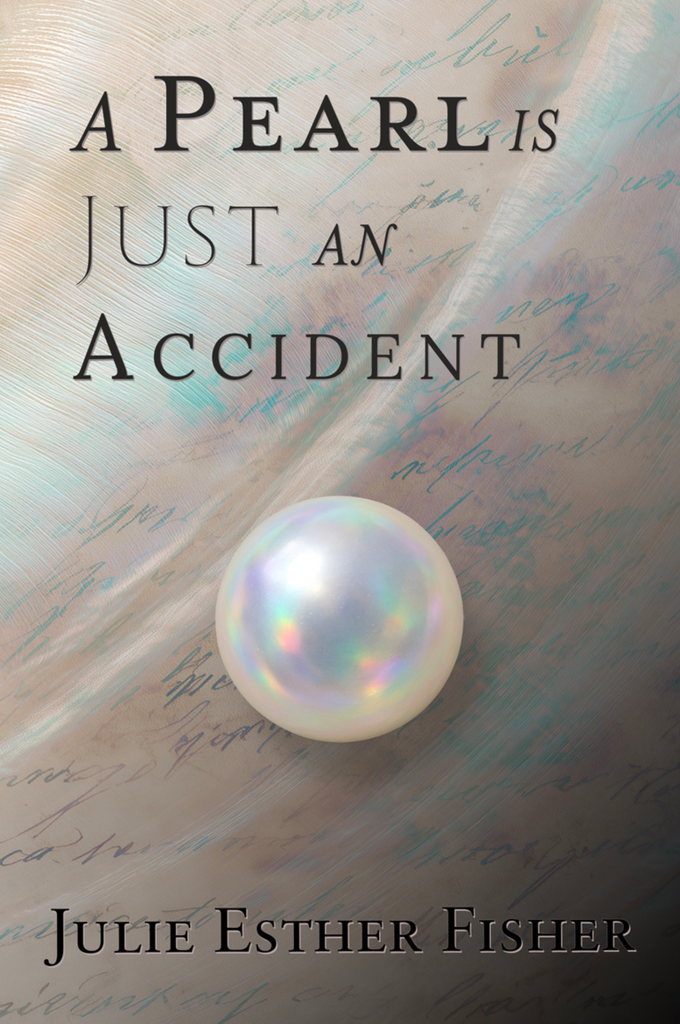
Julie Esther Fisher, a London-raised writer now living among the wooded hills and abrupt seasons of Western Massachusetts, has spent years thinking about this distinction. Her new book, A Pearl Is Just an Accident, is a novel made of fifteen interconnected stories about Eliza James, a paintings conservator whose professional life consists of attending to damaged surfaces. Eliza cleans away grime, varnish, and old overpainting, slowly revealing the original beneath. After a years-long separation, she returns to her childhood home in London and starts performing a similar excavation on her family.
The book’s title comes from an accident of nature. A pearl begins as an intrusion, an unwanted irritant inside an oyster. Layer by layer, over years, the creature coats the disturbance until something luminous emerges. It’s an elegant metaphor, but not a comforting one. The pearl exists because the wound did.
Julie’s own route to the book was just as indirect. She started writing short stories in her twenties and found early success, then fell for one of the literary world’s more persistent superstitions: that a serious writer eventually writes a traditional novel. Developmental editors encouraged her to expand her stories, adding transitions, explanations, connective tissue. She complied. The more she added, the less alive she felt the work became.
The failure wasn’t just technical. Julie began to distrust her own instincts. Depression followed, along with a three-year silence in which she stopped writing altogether.
Her way back came through poetry. Poetry gave Julie permission to speak her own language. Lines could break unexpectedly. Meanings could stay suspended. Silence could do some of the work. She could, as she told me, toss words into the air and see where they landed. The lesson wasn’t just about compression. It was about trusting absence.
When Julie eventually returned to her abandoned fiction, she found the old manuscripts held something salvageable. She pulled out the stories about the James family and started cutting rather than adding. Ten metaphors became one. Explanation gave way to implication. Gradually the stories revealed themselves not as fragments but as rooms in the same house.
This method mirrors Eliza’s work as a conservator. Both writer and character proceed through attention. Eliza’s childhood hypervigilance, once a survival mechanism, matures into vigilance and finally into something almost moral: the willingness to look closely without looking away.
Julie Esther Fisher grants even her most damaging characters that scrutiny. People who might have been rendered simply as abusers become inheritors of injuries themselves. Explanation doesn’t become absolution. It complicates blame.
A Pearl Is Just an Accident ultimately asks whether damage must remain only damage. Its answer is cautious but unmistakable. We can’t undo what’s happened. We may, however, learn to see beneath it.
Restoration, after all, isn’t the art of pretending something was never broken. It’s the art of discovering what survived.