

Hear the Conversation | Get the Book
For most of her professional life, Judy Foreman made her living in the province of the verifiable. As a medical and health columnist for The Boston Globe, and the recipient of more than fifty journalism awards, including a George Foster Peabody Award, she was trained to regard ambiguity as a problem to be solved. Facts were checked. Claims attributed. Uncertainties reduced to their proper proportions. When she decided to write fiction, she discovered the genre asks for almost the opposite. Sometimes the most useful fact is the one that leads the reader in precisely the wrong direction.
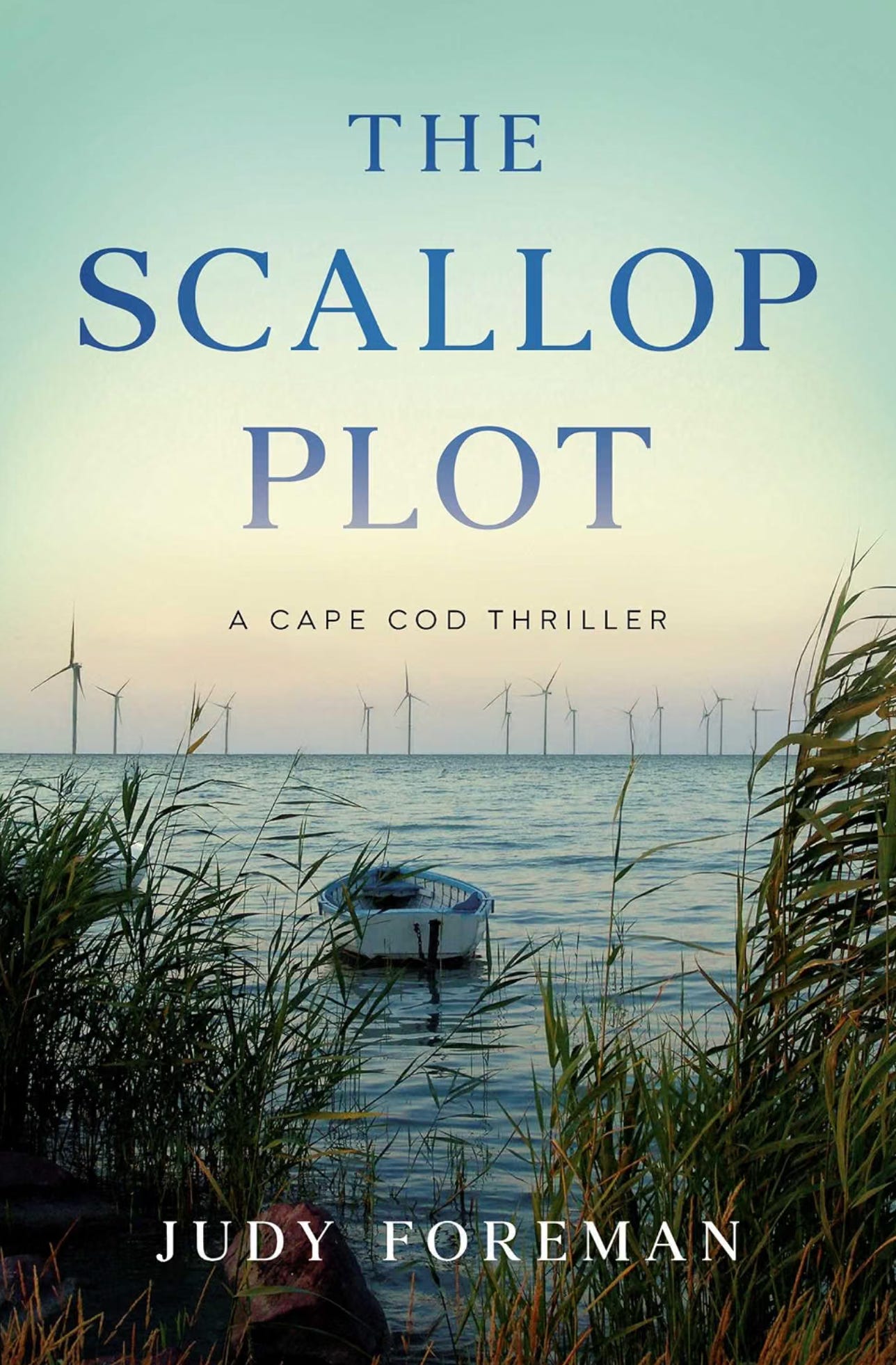
Judy’s new thriller, The Scallop Plot, a sequel to CRISPR’d, it follows Samantha Fuller, a Pulitzer Prize-winning reporter. She and a formidable Cape Cod fisherwoman investigate a lethal outbreak of shellfish poisoning off Provincetown. The mystery winds through offshore wind farms, genetically altered scallops, environmental politics, and corporate intrigue. The science is contemporary. The danger is invented. The distinction between the two is deliberately uncomfortable.
The novel began, improbably enough, with a handywoman. During the pandemic, Judy and her husband were living in Truro, Massachusetts, where they hired a local woman whose life bore little resemblance to Judy’s Cambridge milieu. She was an anti-vaxxer without a college degree, but possessed the kind of practical intelligence that makes academic credentials seem beside the point. She could run a crane, work off-grid electrical systems, and deconstruct a hot tub with a Sawzall. Judy was fascinated. Eventually, elements of this real-world woman found their way into one of the novel’s heroines.
The plot came later. Judy, drawing on decades of science reporting, began wondering about aquaculture and genetic manipulation. If humans could alter fish for economic advantage, what might happen if similar technology were applied to scallops with less innocent intentions? She consulted a Harvard geneticist to make sure the biology held up. The resulting premise may sound futuristic, but Judy insists the underlying science is not fantasy.
Offshore wind gave her another source of productive complication. Judy supports wind energy, but fiction offered her the freedom to explore arguments that journalism often must compress. The novel refuses to divide its combatants neatly into saints and villains. Environmental concerns mingle with local resentment, economic interests, and the influence of fossil-fuel money routed through groups whose names can sound reassuringly civic.
Judy came to fiction by a long route. At Wellesley College, she first imagined becoming a psychologist, then discovered journalism through a friend at the Lowell Sun. The attraction was immediate. Talk to strangers. Learn something. Write it down, see it in print. She entered a profession that still maintained a sturdy wall between reporting and opinion. The erosion of that wall troubles her now. So does a media culture in which Americans increasingly inhabit competing factual universes.
Her move into novels was not effortless. Journalism had taught her to explain. Fiction required her to dramatize. She had to learn point of view and understand that a thriller often works best when the reader experiences the world as a camera might. That deliciously uncomfortable sensation of what can be seen, heard, touched, or smelled.
There is, beneath all this, a deeper continuity. Judy’s memoir, Let the More Loving One Be Me, recounts a complicated childhood and a long process of reckoning and recovery. Her book Exercise Is Medicine examines the body’s remarkable capacity for renewal through movement. Along the way, her work returns to survival, to evidence, and to the difficult business of seeing clearly.
With The Scallop Plot, Judy has not abandoned journalism so much as disguised it. The facts are still there, embedded in the machinery of suspense. She remains interested in who benefits, who suffers, and who is telling the truth.
Judy Foreman has simply learned that, every now and then, the shortest route to the truth may run through a very convincing lie.