
Hear the Conversation | Get the Book
For three decades, Bill and Karen Brodsky maintained the sort of marital arrangement that depended on reliable borders. Bill ran a real-estate business in Manhattan. Karen occupied the adjoining territory of family life. His professional dealings remained largely sealed off from their domestic world, as though protected by a nondisclosure agreement neither of them had thought to sign. Then, one day, Bill unveiled a clandestine operation of his own.
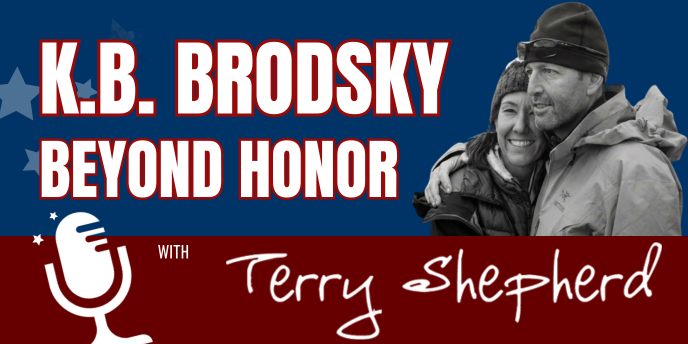
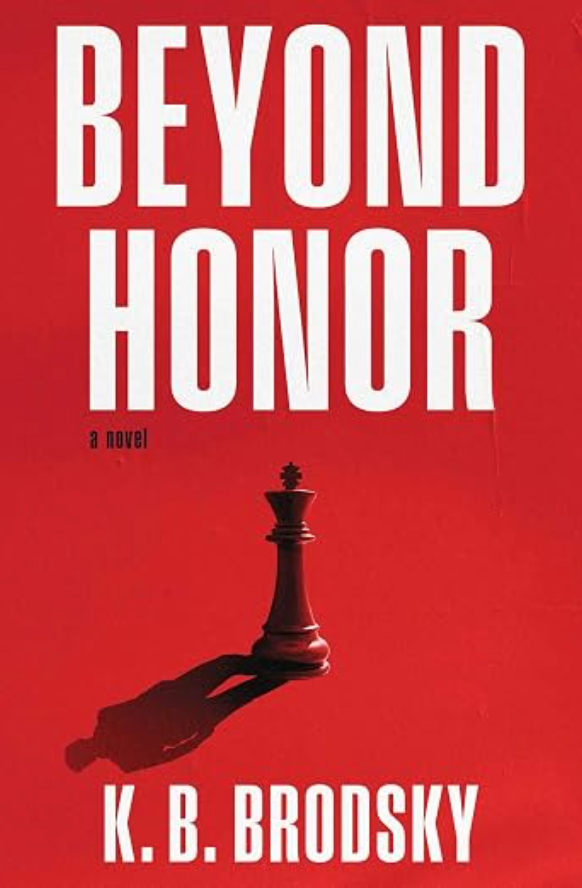
A devoted reader of espionage novels, and suddenly in possession of unstructured time, Bill had secretly written seventy pages of a thriller. He presented the manuscript to Karen without warning. She was startled, pleased, and, before long, recruited. The partnership eventually acquired its own cover identity: K. B. Brodsky, the shared pen name under which the couple has published their debut novel, Beyond Honor.
The book moves with the determined restlessness of monitor populated with airport departures. Its plot travels from the bombed streets of Damascus to Siberia, Alaska’s Kenai Peninsula, and the fluorescent corridors of Washington. At its center is Kevin Rhodes, a grieving paramilitary operative dispatched on a solitary extraction mission in Russia. Elsewhere, a C.I.A. analyst named Whitney Schuyler follows evidence of a Russian-backed banking conspiracy through the government’s upper reaches and, finally, to the Oval Office.
Bill imagined the novel as a return to the geopolitical mosaics of Tom Clancy, in which seemingly unrelated crises, unfolding thousands of miles apart, gradually reveal themselves as components of one vast machine.
Writing such a book with one’s spouse introduces an additional layer of international diplomacy. The Brodskys work according to different clocks. Bill rises at five and begins writing while the day is still theoretical. Karen arrives several hours later, fortified by coffee and prepared to inspect what has occurred in her absence. Their shared Google document is governed by a rule that resembles a bilateral arms treaty: neither may change the text without the other’s approval.
When disputes arise, Karen prefers prolonged negotiations. Bill, according to the couple, is more inclined toward strategic surrender. Karen often prevails, though the arrangement appears to have enriched both the manuscript and the marriage.
For all the novel’s explosions and covert operations, the Brodskys say they were less interested in machinery than in consequence. Karen, who studied writing in college and later took classes in New York, was particularly surprised by Bill’s instinct for creating formidable women. Together, they deepened figures such as Whitney and Cynthia King, a veteran Cold War spy burdened by a thirty-year debt of honor. Loyalty, betrayal, and the divided lives of veterans became the novel’s true terrain.
The operation has succeeded. The Brodskys secured a two-book deal with Simon & Schuster and have submitted a second novel. Their adult children serve as advance readers and informal intelligence analysts.
Hollywood, inevitably, has entered the conversation. Bill jokes that he might follow the Stallone model and cast himself. Karen prefers Meryl Streep as the head of the C.I.A. It is an ambitious piece of casting. But ambition, in the Brodsky household, is no longer considered unusual. It is simply part of the Craft.
That craft has produced Beyond Honor, a thriller from ideation to publication which will leave you satisfied and wanting more, a challenge that the K.B. Brodsky team is likely to deliver again and again.