
Hear the Conversation | Get the Book
It’s been six years since I interviewed August Norman, and since it’s his birthday, I want to revisit our conversation about his novel, Sins of the Mother.
He seems, at first glance, like the sort of man who arrived at crime fiction by way of every other American performance art. He grew up in Indiana in a house where music and theatre were not so much hobbies as atmospheric conditions. His father had played in rock bands, his mother sang in choirs and acted in plays, and Norman, obligingly, tried on everything: saxophone, comedy, improvisation, theatre, film, television, sitcoms, rock bands, screenplays. He moved to Los Angeles with the half-mad confidence of the young and talented, the kind of confidence that is really a disguise for uncertainty. He set about becoming several people at once.
Along the way, he became a novelist. More specifically, he became the creator of Caitlin Bergman, the journalist at the center of Sins of the Mother, a woman who began life not as a protagonist but as a supporting character in another story. This seems fitting. Caitlin, as Norman describes her, is not an idea so much as a survivor, one of those characters who elbows her way out of the margins because she has better questions than anyone else in the room. She is smart, damaged, impatient with nonsense, and morally restless. Norman says he does not try to write “the female experience.” He tries to write Caitlin Bergman. That distinction matters. It is the difference between a thesis and a person.
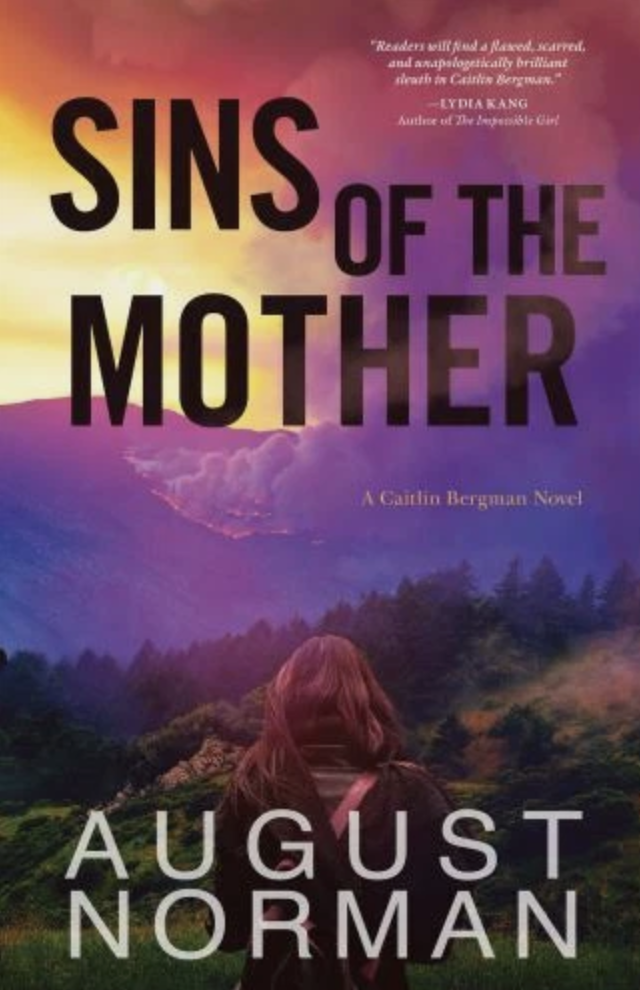
Sins of the Mother gives Caitlin the sort of assignment that is also a reckoning. A mother who abandoned her as a baby is dead, and the investigation leads not merely into genealogy but into the fever swamps of belief: a cult in Oregon, white supremacy, a mass grave, and the strange human genius for believing what evidence has already disproved. When we talked in 2020, Norman told me that the book’s true preoccupation is cognitive dissonance, the question of what people do after the world fails to end on schedule. Do they repent? Do they revise? Or do they double down, finding in contradiction not defeat but proof of their own secret knowledge?
This is grim territory, but Norman’s gift is that he does not mistake darkness for depth. His villains may be frightening, but they are not inert. His supporting players are drawn with the relish of someone who has spent a lifetime listening to actors, comics, detectives, readers, and failed dreamers explain themselves. The book’s opening at Hollywood Forever Cemetery, where Caitlin visits the adoptive father who served as her moral compass, understands Los Angeles as both shrine and crime scene, a city where glamour and decay have always shared a lease.
August Norman’s own career shadows the novel’s themes. He knows about rejection, reinvention, and the families one makes on the way to becoming oneself. He also knows that publication does not solve self-doubt. It merely reduces it by a measurable percentage when some stranger finally says yes. That may be why Sins of the Mother feels less like a sequel than an escalation. Caitlin is not only solving a mystery. She is deciding what inheritance means when blood has failed, when institutions have lied, and when truth, stubbornly pursued, may be the only family worth keeping.